Buying an apartment in Turkey means paying more than the purchase price, taxes and title deed costs. If the property is inside an apartment building or residential complex, one recurring cost deserves particular attention: Aidat.
For investors, high Aidat matters because the owner normally carries it during vacancy and may remain responsible for owner-level or extraordinary expenses. Even when ordinary monthly Aidat is paid by the tenant, a high charge can reduce tenant appeal and resale competitiveness.
Aidat is the building or residential complex service charge paid toward shared expenses such as security, cleaning, elevators, landscaping, common-area utilities and facilities. The amount varies significantly according to the building, apartment allocation and services provided. For investors, higher Aidat reduces net rental ROI and can make a property less competitive at resale, so the current fee, payment history and planned additional charges should be checked before paying a deposit.
Aidat is the Turkish term commonly used for regular contributions toward the management and maintenance of shared parts of an apartment building or residential complex.
It is separate from your private electricity, water and gas consumption and should also be distinguished from one-time purchase expenses such as title deed fees.
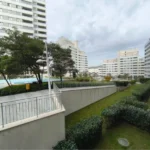
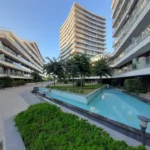
A simple older apartment building may have relatively limited shared expenses. A modern residential site can include 24-hour security, reception, landscaped grounds, indoor and outdoor swimming pools, gyms, children’s areas, parking facilities and extensive communal spaces.
More facilities generally mean more expenses to operate.
This explains why comparing two apartments based only on their sale price can be misleading. A cheaper apartment inside an amenity-heavy project could cost substantially more to hold every year.
Under Turkey’s condominium framework, owners participate in common expenses according to the applicable management plan and legal allocation rules. Aidat can therefore vary not only between projects but also between units within the same development.
Start a Conversation
Contact us through the communication method that suits you
How Are Property Service Charges Calculated in Turkey?
There is no universal Aidat rate for property in Turkey.
The management of a building or residential complex prepares an operating budget based on expected common expenses. These costs are then allocated among owners according to the applicable management plan and Turkey’s condominium rules.
What Determines the Amount?
The most important factors are the project’s operating expenses and the way those expenses are allocated.
A development with several pools, landscaped gardens, multiple elevators, security personnel and extensive common areas will normally require a larger operating budget than a conventional residential building.
Unit characteristics can also matter because not every expense is necessarily divided equally among all apartments.
For investors, this means that statements such as “the average Aidat in Istanbul is X TL” have limited value when evaluating an individual investment.
The figure that matters is the actual Aidat for the specific apartment you intend to purchase.
Before buying, request the current monthly charge, recent payment history, management budget and information about any planned extraordinary expenditure.
Aidat commonly contributes toward operating and maintaining shared areas and services.
Depending on the development, these expenses can include security and concierge staff, common-area cleaning and electricity, elevator maintenance, landscaping, swimming pools, gyms, technical personnel and general building management.
Luxury projects naturally tend to have more expensive operating structures.
However, buyers should distinguish between regular Aidat and extraordinary expenses.
Regular Aidat vs Additional Assessments
A building may require major repairs or improvements that cannot be covered by its normal operating budget. Owners can therefore face additional charges for specific works.
This is particularly important when purchasing an older property.
A monthly Aidat that appears inexpensive today does not necessarily mean the building has no upcoming financial obligations.
Ask the management whether major façade, roof, elevator, mechanical-system or common-area works have already been approved or discussed.
How Aidat Affects the Real Cost of Buying Property in Turkey
Many buyers researching the costs of buying property in Turkey concentrate on the expenses paid during acquisition: title deed transfer, valuation where applicable, insurance, legal costs and agency fees.
Aidat is different because it continues throughout ownership.
Consider two comparable investment apartments:
Property A
Property B
Purchase price
6,000,000 TL
6,000,000 TL
Monthly Aidat
2,500 TL
7,500 TL
Annual Aidat
30,000 TL
90,000 TL
5-year Aidat at today’s rate*
150,000 TL
450,000 TL
*Illustrative only; actual Aidat can change over time.
The difference is 300,000 TL over five years before any future increases.
This is why Aidat should be treated as part of the property’s holding cost rather than an insignificant monthly expense.
The question is not simply whether the Aidat is high.
The better question is:
Does the property’s rental demand, amenities, quality and expected value justify what I am paying?
A 6,000 TL Aidat in a professionally managed premium development could make more investment sense than 3,000 TL in a poorly maintained building if the first property commands stronger rent and resale demand.
Furnished 2+1 Apartment for Sale in Nlive Bahçeşehir
How Service Charges Affect Rental Yield and Net ROI
Aidat becomes particularly important when evaluating a rental investment.
Suppose an apartment costs 5,000,000 TL and generates 360,000 TL annual gross rent.
Its gross rental yield is:
360,000 ÷ 5,000,000 = 7.2%
Now assume the investor ultimately bears 60,000 TL per year in Aidat and other property-level service expenses.
Ignoring other expenses for simplicity, income falls to 300,000 TL, producing:
300,000 ÷ 5,000,000 = 6%
The property has not stopped being profitable, but its real investment performance looks different from the headline 7.2%.
Who Pays Aidat: Owner or Tenant?
This requires careful treatment.
In a standard rental arrangement, the tenant commonly pays ordinary monthly Aidat associated with services used during occupancy, such as cleaning, security, elevators and common-area operations. The owner generally remains responsible for expenses arising from ownership itself or extraordinary capital works, while the exact allocation should be confirmed in the lease and according to the nature of the expense.
If the property is vacant, the owner normally carries the monthly Aidat until a new tenant takes possession.
Investors should therefore review the tenancy agreement and the nature of each charge rather than assuming every service expense can be transferred to the tenant.
This issue recurs in real-world discussions among residents and property owners, including disputes over unpaid Aidat at the end of tenancies. The practical lesson for investors is straightforward: verify who is contractually responsible and monitor payments rather than assuming they are being made.
High Aidat does not automatically reduce a property’s market value.
But high Aidat without corresponding value can weaken resale appeal.
Even when the tenant is responsible for ordinary Aidat, the amount still matters. Tenants compare their total monthly housing cost—not rent alone. A property renting for 30,000 TL plus 9,000 TL Aidat competes differently from a similar property renting for 30,000 TL plus 3,000 TL Aidat.
This can force the landlord to accept a lower rent, increase vacancy risk, or make the unit less attractive to future investors.
If the second development cannot justify the difference through better facilities, management, location, rental income or building quality, the higher recurring cost becomes a disadvantage.
This is especially relevant for investors because the next buyer may run the same ROI calculation.
High or rapidly increasing Aidat can therefore:
reduce the buyer pool, weaken investor demand, and make competing properties more attractive.
On the other hand, well-managed facilities can protect the physical condition and desirability of a project, which may support rents and resale demand.
The objective is therefore efficient Aidat, not necessarily the lowest Aidat.
What Aidat Should Investors Check Before Buying Property in Turkey?
Before paying a reservation deposit, do not simply ask:
“How much is the Aidat?”
Ask for the complete picture.
Check the Current Fee
Confirm the amount applicable to the exact unit—not an estimate for the development.
Request the Previous 12 Months
This can reveal whether charges have recently increased and gives you a better basis for estimating annual ownership costs. Buyer guidance in Turkey also recommends reviewing recent Aidat history and planned special assessments before committing to a property.
Ask About Extraordinary Charges
Determine whether owners have approved or are discussing major repairs, equipment replacement or improvements.
Understand What You Receive
A high Aidat may be reasonable when it supports facilities that increase rental demand. Paying heavily for amenities that your target tenants do not value is different.
Calculate Net ROI Before Buying
Run the investment calculation using:
– Annual rent – owner-paid Aidat during vacancy – owner-level or extraordinary building charges – maintenance – vacancy loss – management and other owner expenses.
Do not select a property because its gross yield looks attractive while ignoring recurring ownership costs.
Consider the Future Buyer
Finally, ask yourself:
Would another investor be comfortable paying this Aidat five years from now?
If the answer is questionable, the recurring charge should become part of your negotiation and resale-risk assessment before purchasing.
Final Verdict: Evaluate Aidat Before You Evaluate the ROI
Aidat should never be an afterthought when buying property in Turkey.
For an end user, it determines part of the ongoing cost of living in the property. For an investor, it can directly influence net rental yield, annual holding costs and eventually resale demand.
The lowest Aidat is not automatically the best investment.
Instead, compare what the project charges with what it provides, how those facilities affect achievable rent, whether fees have been increasing, and whether future buyers are likely to accept the same cost structure.
Before purchasing, obtain the actual Aidat for the unit, review recent charges and planned extraordinary expenses, and include those figures in your net ROI calculation.
That turns Aidat from an unexpected ownership expense into something much more useful: a measurable factor in deciding whether the property itself is worth buying.
FAQ
What does Aidat mean in Turkey?
Aidat is the regular contribution collected for shared building or residential complex expenses, such as cleaning, security, elevators, landscaping and communal facilities.
How much is Aidat in Turkey in 2026?
There is no standard nationwide amount. Current buyer guides show that fees vary substantially depending on the development and its facilities. Modern or luxury sites can cost several thousand Turkish lira per month, so investors should verify the exact building rather than relying on an average.
Do I have to pay Aidat if my apartment is empty?
Ownership obligations toward common expenses do not simply disappear because an apartment is vacant. Investors planning to leave a property unused should therefore include Aidat in their holding-cost calculations.
Who pays Aidat in a rented apartment?
Ordinary operating charges are often passed to tenants through rental arrangements, while certain ownership-related or extraordinary costs can remain the owner’s responsibility. The lease and type of expense should be reviewed carefully.
Can Aidat increase after I buy?
Yes. Building operating costs, staffing, energy, maintenance and management budgets can change, meaning the amount paid by owners can increase.
Can unpaid Aidat cause problems when selling?
Outstanding building-management debts can complicate a transaction and should be identified and settled as part of pre-sale due diligence. Buyers should ask about outstanding Aidat before completing a purchase.
Is a high Aidat always a reason to avoid a property?
No. The important issue is whether the fee is justified by the project’s management, amenities, rental demand, and property values. A high fee with little investment benefit is more concerning than a higher fee supporting a well-managed, high-demand development.