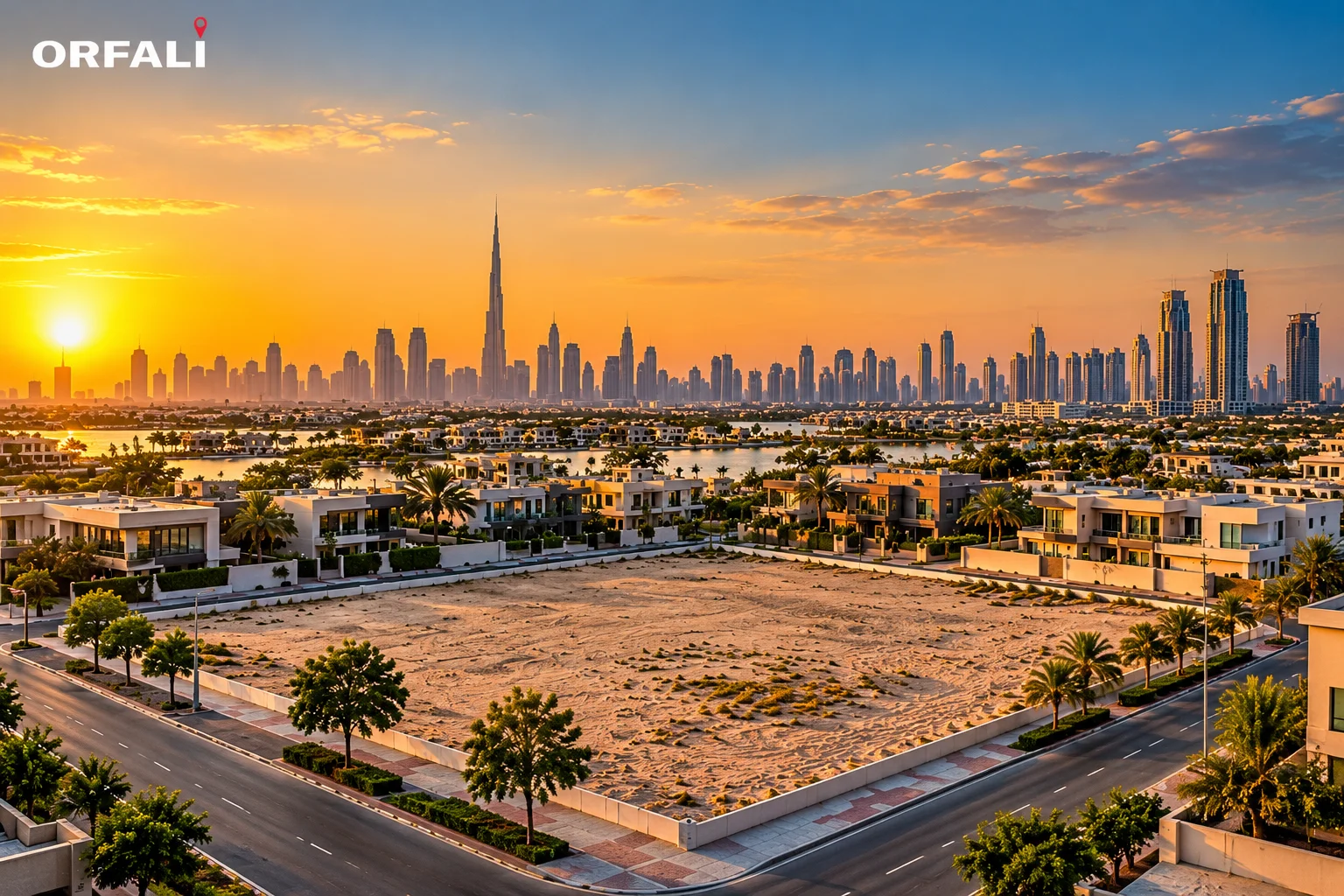
Foreigners can buy land in Dubai, but the right to own a plot depends on its location, designated ownership status, and permitted land use. Foreign buyers can acquire freehold property in areas designated for foreign ownership, subject to applicable laws and registration requirements. However, not every plot advertised for sale is available to every buyer, and land ownership does not automatically grant unrestricted building rights.
For investors comparing Dubai land for sale, the key questions are whether the plot qualifies for foreign ownership, what can legally be built on it, the total acquisition cost, and whether its development potential supports the intended investment strategy.
Can Foreigners Buy Land in Dubai? Freehold Ownership Rules Explained
Yes. Foreign nationals can buy land in designated freehold areas of Dubai, subject to the applicable ownership rules and the legal status of the specific property. Freehold ownership generally provides ownership of the land and the property built on it, rather than a time-limited right to use the property.
Dubai also recognizes other property rights, including leasehold and usufruct arrangements. These rights differ from freehold ownership in duration, control, and transfer conditions. Buyers should therefore distinguish between purchasing a plot outright and acquiring a long-term right to use land.
The legal framework includes Dubai Law No. 7 of 2006 concerning real property registration, which establishes the framework for property ownership and registration. Foreign ownership eligibility depends on the designated areas and the particular property’s status. Before paying a deposit, buyers should verify the ownership classification and registration eligibility with the Dubai Land Department (DLD) or a qualified property lawyer.
Start a Conversation
Contact us through the communication method that suits you
Where Can Foreigners Buy Freehold Land in Dubai? Eligible Areas and Plot Types
Foreign ownership is permitted in designated areas, but eligibility must be checked for the specific plot rather than assumed from the community name alone. Dubai has established freehold districts with residential and investment properties, while individual parcels may have different ownership or usage conditions.
Areas investors may investigate include Dubai Hills Estate, Palm Jumeirah, Dubai South, Jumeirah Village Circle, and selected parts of Mohammed Bin Rashid City. These locations have different development profiles, price levels, and property types. However, their inclusion here does not confirm that every vacant plot within them is available for foreign freehold ownership.
When comparing freehold plots in Dubai, confirm:
Whether the exact plot can be registered under a foreign buyer’s name.
Whether the plot is residential, commercial, industrial, or designated for another use.
Whether the seller has valid title and authority to transfer it.
Whether the master developer imposes additional conditions.
The distinction matters because a plot suitable for a private villa may not be suitable for a commercial building or a larger development.
Land for Sale in Dubai: What Types of Plots Can You Buy?
The main plot categories include:
Residential plots: Intended for villas or other approved residential buildings, subject to the plot’s development parameters.
Commercial plots: Designated for approved business uses, such as offices, retail, or other commercial buildings.
Mixed-use plots: May allow a combination of residential and commercial uses where the applicable planning rules permit it.
Development plots: Larger parcels intended for projects that may require additional approvals, infrastructure planning, and financing.
The permitted use determines what you can build, the likely construction cost, and the potential resale market. A low-priced plot may be less attractive if it has limited building capacity, difficult access, or expensive utility requirements.
Before comparing plots for sale in Dubai, request the official plot details and planning conditions. Do not rely solely on a listing description or a broker’s verbal assurances.
How Much Does Land Cost in Dubai? Prices and Purchase Costs
There is no single price for land in Dubai. Asking prices depend on the community, plot size, location within the development, permitted use, infrastructure, and how much construction the plot allows.
A small residential plot in an established community can have a very different price from a large commercial parcel or a development site. Compare the price per square foot, but also consider the approved building area. Two plots of similar size may have different investment potential if their permitted development differs.
Budget for the following costs:
Dubai Land Department transfer fee: The published fee for registering a property sale contract is generally 4% of the sale value. Confirm the applicable fee and how it is allocated between buyer and seller for your transaction.
Trustee and registration service charges: These may apply depending on the transaction and registration process.
Brokerage commission: Confirm the agreed amount and payment terms in writing.
Legal and due-diligence costs: May include title checks, contract review, surveys, and technical advice.
Financing and development expenses: If applicable, include mortgage-related fees, design, permits, construction, utility connections, and community charges.
For example, on a plot priced at AED 2 million, a 4% transfer fee would equal AED 80,000. This is an illustration of the fee calculation, not a complete estimate of the transaction’s total costs. Check the current fee schedule before budgeting.
How to Buy Land in Dubai: Steps, Documents and Registration
Buying land in Dubai requires more than agreeing on a price. Foreign buyers should follow a documented process and verify the plot before transferring substantial funds.
Confirm eligibility: Check that the specific plot is within an area where the intended ownership right is permitted for a foreign buyer.
Verify the title: Review the title deed, registered owner, plot number, boundaries, and any registered mortgage or other encumbrance.
Confirm permitted use: Obtain the relevant planning information and check development conditions with the appropriate authority or master developer.
Review the sale agreement: Ensure it identifies the plot accurately and sets out the price, deposit, payment schedule, completion conditions, and responsibility for fees.
Arrange payment and clearances: Confirm the payment method and obtain any required approvals or no-objection certificates.
Register the transfer: Complete the transaction through the appropriate Dubai Land Department registration process and obtain the registered ownership documentation.
The Dubai Land Department publishes the legal framework for foreign ownership and property registration. Buyers should use official records to confirm the transaction rather than relying on marketing materials alone.
Can You Build on Purchased Land in Dubai? Permits, Zoning and Restrictions
Owning a plot does not give the owner unrestricted permission to build. Construction depends on the plot’s approved use, planning rules, building parameters, and any conditions imposed by the master developer or relevant authority.
Before purchasing, confirm the permitted building type, maximum height, setbacks, plot coverage, floor-area limits where applicable, parking requirements, and any design guidelines. Also establish whether the site has access to roads, electricity, water, drainage, and other necessary infrastructure.
Construction generally requires the relevant approvals and permits. Dubai Municipality provides building regulation and permit services, while additional requirements may apply depending on the plot’s location and development.
If you intend to build a villa, commercial building, or multi-unit project, ask a qualified architect or engineer to assess the plot before you commit. A feasibility review can reveal restrictions that significantly affect the project’s cost or viability.
Is Buying Land in Dubai a Good Investment? Returns and Risks
Land investment in Dubai may suit buyers seeking long-term appreciation or a future development opportunity. However, vacant land usually does not generate rental income on its own. Returns depend on the purchase price, market demand, holding period, development potential, and eventual exit strategy.
Potential advantages include control over a future building project, flexibility within approved development limits, and exposure to demand in growing districts. Risks include slow resale, market price declines, infrastructure delays, construction cost increases, and restrictions that limit how the land can be used.
Investors should distinguish between capital appreciation and income generation. A plot may increase in value without producing cash flow, while an income-producing property may provide rent but require different maintenance and operating costs.
Before buying, estimate the total investment, including acquisition costs, annual holding expenses, design and approval fees, construction costs, and a contingency for delays. Compare the projected outcome with alternative investments, and avoid relying on promised appreciation or unverified rental projections.
What Should Foreign Buyers Check Before Purchasing a Plot in Dubai?
Use this checklist before signing a purchase agreement:
Ownership eligibility: Confirm that the exact plot supports the intended foreign ownership right.
Title and encumbrances: Verify the registered owner, title deed, mortgages, restrictions, and any outstanding claims.
Plot boundaries and access: Check the official survey, dimensions, road access, and easements.
Zoning and development capacity: Confirm permitted use, building parameters, and approval requirements.
Utilities and infrastructure: Establish whether services are available and whether connection costs remain outstanding.
Developer and community rules: Review design requirements, construction deadlines, fees, and transfer conditions.
Total acquisition cost: Calculate registration fees, brokerage, legal expenses, and other applicable charges.
Exit strategy: Consider likely resale demand, the target buyer, and how long the plot could remain unsold.
For additional protection, appoint an independent property lawyer and, where appropriate, a qualified surveyor or development consultant. Their review should focus on the specific plot and the intended use, rather than relying on general statements about the community.
Final Verdict: Should You Buy Land in Dubai in 2026?
Buying land in Dubai can be an option for foreign investors who want to develop a property or hold a plot for potential long-term appreciation. The most important step is confirming that the specific plot is eligible for foreign ownership and supports the intended development.
Before choosing among Dubai land-for-sale opportunities, compare location, permitted building capacity, infrastructure, total acquisition costs, and resale prospects. A plot’s advertised price alone does not establish its investment value.
At Orfali Properties, we help buyers compare real estate opportunities in Dubai based on their investment goals, budget, and preferred locations. Before committing to a plot, arrange independent legal and technical checks to ensure the ownership rights and development conditions match your plans.
Frequently Asked Questions
Can foreigners buy land in Dubai without living in the UAE?
Yes. Non-resident foreign nationals can acquire eligible property in Dubai’s designated foreign-ownership areas, subject to the applicable rules and registration requirements.
Can foreigners buy freehold plots in Dubai?
Yes, where the specific plot falls within an area designated for foreign freehold ownership. Buyers should verify the exact plot and its registration eligibility before paying a deposit.
Can foreigners buy commercial land in Dubai?
Potentially, depending on the plot’s ownership classification, permitted commercial use, and applicable conditions. Confirm both foreign ownership eligibility and the proposed business or development use.
How much is the Dubai Land Department fee when buying land?
The published sale-registration fee is generally 4% of the sale value. Other service, brokerage, legal, and transaction costs may apply, so confirm the current fees for your specific purchase.
Can I build a villa immediately after buying a plot?
Not necessarily. You must confirm the plot’s planning conditions, obtain the necessary approvals and permits, and satisfy applicable infrastructure and developer requirements before construction.
Is buying land in Dubai better than buying a completed property?
It depends on your investment objectives. Land may offer development flexibility and potential appreciation, while a completed property may provide immediate use or rental income. Compare the total costs, risks, liquidity, and expected holding period before deciding.