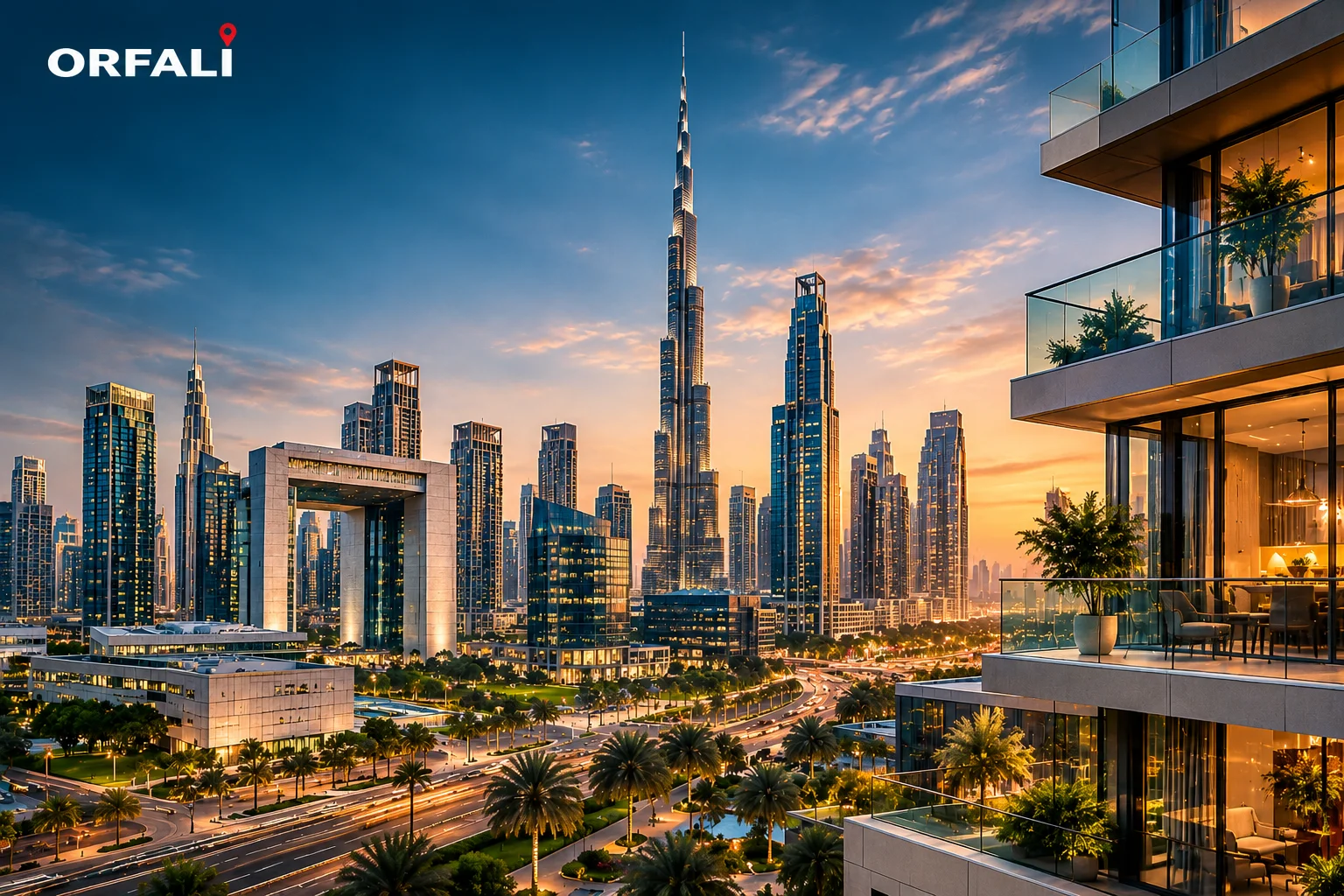
Dubai is entering 2027 with a property market shaped by more than international investment and luxury real estate. Its growing technology, financial services and innovation sectors are attracting entrepreneurs, executives, skilled professionals and business owners who may also want to establish a long-term home in the city. As residency pathways evolve and the economy diversifies, the key question for property buyers is becoming increasingly important: Will Dubai’s expanding resident and business population create new sources of property demand in 2027?
The opportunity is not limited to investors seeking a Golden Visa through property ownership. It also involves people moving to Dubai for business, technology, finance and professional opportunities. For property investors, understanding these different demand drivers can help identify which locations and property types may remain attractive as the market enters its next phase.
Dubai’s property market is attracting a broader range of buyers than traditional overseas real estate investors. The city continues to develop as a destination for international businesses, financial institutions, technology companies and skilled professionals. Each group brings different housing requirements, investment priorities and expectations.
This creates several potential sources of residential demand:
Property investors seeking rental income, capital appreciation, and long-term asset ownership.
Entrepreneurs and business owners establishing companies and seeking a permanent base for themselves and their families.
Technology professionals moving to Dubai to work in artificial intelligence, software, digital services and emerging industries.
Families and executives seeking long-term stability, quality housing, education and access to business districts.
These groups do not necessarily purchase the same type of property. Some may prefer centrally located apartments close to employment hubs, while others may choose family villas and townhouses in established residential communities.
The distinction matters. Future demand will not depend only on how many investors enter Dubai, but also on how many people choose to live, work, and build businesses in the city.
Start a Conversation
Contact us through the communication method that suits you
How Is Dubai Evolving from an Investment Destination into a Global Technology and Financial Hub?
Dubai’s economic direction is giving international professionals and businesses more reasons to establish a presence in the city.
The financial sector is one important example. The Dubai International Financial Centre (DIFC) has continued expanding its ecosystem of financial services, wealth management, artificial intelligence and financial technology companies. By November 2026, its AI, FinTech and innovation community had exceeded 2,000 firms.
This expansion matters to the property market because businesses bring employees, executives, founders and international clients. As companies grow, their presence can support demand for both residential and commercial property.
Technology is another important driver. Dubai’s focus on artificial intelligence, digital infrastructure, financial innovation and smart government services is helping create an environment for companies operating beyond traditional sectors.
This economic transformation can attract several types of property buyers:
Technology entrepreneurs and founders may look for modern apartments near business districts, flexible living arrangements and properties that offer convenient access to their offices.
Financial executives and wealth managers may prioritise premium apartments, established residential communities and properties close to DIFC and Downtown Dubai.
International professionals and families may prefer larger homes, access to schools, healthcare, transport and lifestyle facilities.
Business owners and investors may consider residential property alongside commercial real estate as part of a broader investment strategy.
Dubai’s appeal is therefore becoming more diversified. Real estate demand can benefit not only from people who arrive to purchase property, but also from people who arrive to establish businesses and eventually decide to settle in the city.
What Does the UAE Golden Visa Offer Property Investors in 2027?
The Golden Visa remains one of the important long-term residency options for eligible property investors in the UAE.
Under the current Dubai Land Department investor service, a real estate investor who owns one or more properties with a qualifying purchase value of at least AED 2 million may apply for a renewable 10-year residence permit. Eligible applicants can also sponsor family members, subject to the applicable requirements.
The property investment pathway is particularly relevant to international buyers who want to combine real estate ownership with a longer-term presence in Dubai.
Key points include:
The qualifying property value must reach at least AED 2 million.
Multiple properties may be considered where the applicable requirements are met.
A mortgaged property may qualify, subject to the required bank documentation and confirmation of the qualifying paid amount.
The investor must provide the necessary ownership and identification documents.
The application must satisfy the procedures of the relevant authorities.
The exact documentation and eligibility conditions depend on the applicant’s circumstances and the property ownership structure. Buyers should verify the requirements before completing a purchase, particularly when buying off-plan or using mortgage finance.
For investors, the important distinction is that property ownership and residency eligibility are connected, but they are not the same decision. A property may be financially attractive without qualifying for a particular residency pathway, and a qualifying investment still needs to meet the relevant application conditions.
What Residency Pathways Could Attract More Investors and Professionals in 2027?
The UAE’s residency framework already extends beyond property investment. It includes pathways for entrepreneurs, public investment investors, exceptional talents, scientists and specialised professionals.
This broader framework is important because it allows Dubai to attract people who contribute to the economy through different activities, not only through real estate purchases.
Golden Residency for entrepreneurs and business owners
Eligible entrepreneurs may apply through designated pathways that assess their business activity, project credentials and approvals from the relevant authorities.
This is particularly relevant to founders establishing technology companies, innovative businesses and other qualifying ventures in the UAE.
Residency for specialised and technology talent
The existing framework includes eligible specialists and exceptional talents in areas such as digital technology, science, engineering and innovation.
As Dubai develops its technology ecosystem, these pathways may help attract professionals who want to build long-term careers in the city.
Residency for public investment and business investors
The UAE also provides long-term residency options for eligible investors in public investments and qualifying businesses. These routes operate under their own financial and documentary requirements.
Property-linked Golden Residency
Real estate remains a direct route for eligible investors who meet the qualifying property value and ownership requirements.
Together, these pathways create a wider pool of potential residents. Not everyone who receives residency will purchase a home immediately, but a longer-term connection to Dubai can influence decisions about renting, buying and investing in property.
Will Dubai Introduce New Residency Rules or Easier Procedures in 2027?
This is one of the most important questions for international investors planning their next property purchase.
As of November 2026, the existing official residency framework provides several routes for investors, entrepreneurs and specialised professionals. However, there is no confirmed announcement establishing a general replacement of the Golden Visa system or a new set of universal property-investor requirements specifically for 2027.
That does not mean the process will remain unchanged. Government services are increasingly moving towards integrated digital platforms, and further improvements in application procedures, document verification and service delivery are possible.
There are several developments worth monitoring.
1. More integrated digital residency services
The UAE is continuing to develop digital government services, including unified access, digital identity and more proactive service delivery.
For applicants, future improvements could mean fewer manual steps, more connected government records and a smoother application experience. These are reasonable areas to watch, but they should not be treated as confirmed 2027 changes.
2. Clearer coordination between property and residency applications
Property ownership, title registration, investor eligibility and residency applications involve different administrative steps.
Further integration between property and immigration services could make the process easier to navigate. Any change to the required documents, qualifying property value or approval procedure would still need formal confirmation.
3. Continued development of specialised residency pathways
As Dubai attracts more technology companies, financial institutions and international businesses, specialised talent and entrepreneur pathways will remain relevant.
We may see continued refinement in how eligible applicants demonstrate their professional credentials, business activity and economic contribution. However, no specific new 2027 category or eligibility threshold should be assumed without an official announcement.
4. Greater digital access for international applicants
The current framework already provides digital application channels. Further improvements could make it easier for eligible investors outside the UAE to understand their requirements and complete the necessary steps.
The practical point for buyers is simple: do not postpone a property decision based on an assumed future visa benefit. Base the purchase on the current rules, the property’s investment fundamentals, and your own residency objectives. If new procedures are introduced in 2027, assess them once they are officially published.
How Could New Residency Pathways Affect Dubai’s Residential Property Demand?
Residency policy can influence property demand by changing how people approach their relationship with Dubai.
A short-term visitor may rent accommodation for a few weeks. A professional relocating for several years may prefer a long-term rental. An entrepreneur establishing a business may eventually purchase a home, while an investor seeking long-term residency may consider property ownership as part of a wider financial plan.
This creates several potential demand segments.
Buyer or resident profile
Potential property preference
Technology professionals
Modern apartments near business and technology hubs
Financial executives
Premium apartments near DIFC, Downtown and Business Bay
Entrepreneurs and founders
Flexible apartments and established central communities
Families relocating long-term
Villas, townhouses and larger apartments
International property investors
Rental-focused apartments and selected residential communities
However, stronger residency appeal does not automatically mean that every Dubai neighbourhood will experience the same increase in demand.
Location, affordability, property quality, transport access, rental supply and competing developments will continue to influence performance.
The strongest opportunities may emerge where employment growth, population expansion and residential infrastructure develop together.
Which Dubai Areas Could Benefit from Growing Technology and Financial Employment?
Investors should look beyond the headline growth of Dubai’s economy and examine where new residents are likely to work and live.
Several established locations offer different advantages.
Business Bay
Business and residential convenience
Business Bay benefits from its proximity to Downtown Dubai and its mix of residential, commercial and hospitality developments. It can appeal to professionals who want to live close to offices, restaurants and central business facilities.
Apartments in this area may suit tenants who prioritise location and convenient access to central Dubai.
DIFC and Downtown Dubai
Financial services and premium residential demand
DIFC is an important financial centre, while Downtown Dubai offers established residential, retail and lifestyle facilities.
Together, these locations can attract senior professionals, executives, international business owners and residents seeking premium city living.
Dubai Silicon Oasis
Technology and innovation-oriented living
Dubai Silicon Oasis offers a combination of residential communities, business facilities and technology-oriented infrastructure.
It may appeal to professionals and families looking for a more community-focused environment while remaining connected to Dubai’s wider business network.
Dubai Hills Estate
Family living and long-term residential appeal
Dubai Hills Estate offers a different proposition from central business districts. Its parks, schools, retail facilities and residential mix can appeal to families relocating to Dubai for longer periods.
For buyers seeking a home rather than a short-term investment, established family communities deserve particular attention.
These locations serve different buyer profiles. The right choice depends on whether the objective is rental demand, family use, capital appreciation or a combination of these factors.
Is Dubai Property Still a Good Investment as the Market Enters 2027?
Dubai’s property market remains significant, but investors should approach 2027 with more selectivity than simply assuming that the entire market will continue rising at the same pace.
Dubai recorded 270,328 real estate transactions worth AED 917 billion in 2025. The market also attracted 193,100 unique investors, demonstrating the depth and international reach of property investment activity.
Annual Data Review 2025
By the third quarter of 2026, market conditions had become more differentiated. Residential transaction activity moderated compared with the previous year, while the performance of completed properties, off-plan developments, villas and apartments varied by location and segment.
Dubai Residential Market Report Q3 2026+1
This makes property selection increasingly important.
Investors should evaluate:
Rental demand: Is the property located near employment centres, schools, transport and daily services?
Supply pipeline: How many competing properties are expected to enter the same area?
Developer track record: Does the developer have a credible delivery history and transparent project documentation?
Purchase price: Does the price reflect the property’s location, specifications and competing inventory?
Exit potential: Is there an established resale market for the property type?
Residency eligibility: Does the investment meet the applicable requirements if long-term residency is part of the purchase objective?
A growing technology and financial economy can support long-term housing demand, but it does not remove property-specific risks. Buyers should assess each development on its own fundamentals rather than relying on Dubai’s overall economic growth as a guarantee of returns.
What Should Property Investors Prepare Before Buying in Dubai in 2027?
Investors planning a purchase in 2027 should prepare for both the property transaction and any intended residency application.
A practical approach includes:
Define the investment objective. Decide whether the priority is rental income, personal use, long-term residency or capital appreciation.
Choose the property segment. Compare apartments, townhouses and villas based on your budget and expected tenant or buyer profile.
Verify the ownership structure. Confirm that the property can be registered correctly in the applicant’s name.
Check residency eligibility. If you intend to apply for a Golden Visa, confirm the qualifying value, mortgage conditions and documentation with the relevant authority.
Review the developer and project. For off-plan purchases, examine the payment plan, construction progress, delivery terms and registration details.
Calculate the full purchase cost. Include transfer fees, registration, agency commission, service charges and any financing costs.
Monitor official 2027 updates. Review any new residency rules or digital service changes only after they are formally announced.
Preparing early can help investors avoid choosing a property based on an assumption about future residency rules.
Final Verdict: Dubai’s Next Property Buyers May Come from More Diverse Backgrounds
Dubai’s next phase of property demand will not be shaped by real estate investors alone. The expansion of its financial services, technology and innovation sectors is creating a wider international business environment, attracting professionals, entrepreneurs, executives and families who may choose to establish a long-term presence in the city.
Residency pathways are an important part of this picture. The existing Golden Visa framework already gives eligible property investors a route to long-term residency, while other pathways serve entrepreneurs and specialised professionals. Any additional 2027 changes should be assessed through official announcements rather than assumptions.
For investors, the opportunity lies in understanding who may live in Dubai in the coming years, where employment and business activity are expanding, and which residential communities are positioned to serve those needs.
At Orfali Properties, we help investors make informed real estate decisions in Dubai and Istanbul. Whether you are looking for a rental-focused apartment, a family home, an off-plan opportunity or a property that aligns with your long-term residency plans, Orfali Properties is your real estate investment partner in Istanbul and Dubai.
FAQ
Will Dubai introduce new Golden Visa rules in 2027?
As of November 2026, no general replacement of the existing Golden Visa framework or confirmed set of new property-investor requirements for 2027 has been announced. Further digital service improvements or adjustments to specific pathways are possible, but investors should rely on officially published rules.
Can buying property in Dubai qualify an investor for a Golden Visa?
Yes. Under the current Dubai Land Department investor service, eligible property investors with qualifying property ownership worth at least AED 2 million can apply for a renewable 10-year residence permit, subject to the applicable requirements and documentation.
Can mortgaged property qualify for a Dubai Golden Visa?
Yes, a mortgaged property may qualify. The investor must provide the required bank documentation, including confirmation of the amount paid and the outstanding balance where applicable. Eligibility depends on the relevant authority’s requirements.
Will technology and financial sector growth increase property demand in Dubai?
It can support demand by attracting companies, entrepreneurs, executives and skilled professionals who need housing. However, the effect will vary between locations and property types, depending on employment growth, affordability, available supply and residential facilities.
Which Dubai areas could attract professionals moving to the city?
Business Bay, DIFC, Downtown Dubai and Dubai Silicon Oasis offer different advantages for professionals and business owners. Dubai Hills Estate may be more suitable for families seeking larger homes and established community facilities.
Should investors buy property before possible residency changes in 2027?
A purchase should make sense under the current regulations and investment conditions. Investors should not rely on unconfirmed future visa benefits. If residency is an important part of the decision, verify eligibility before committing to the property.