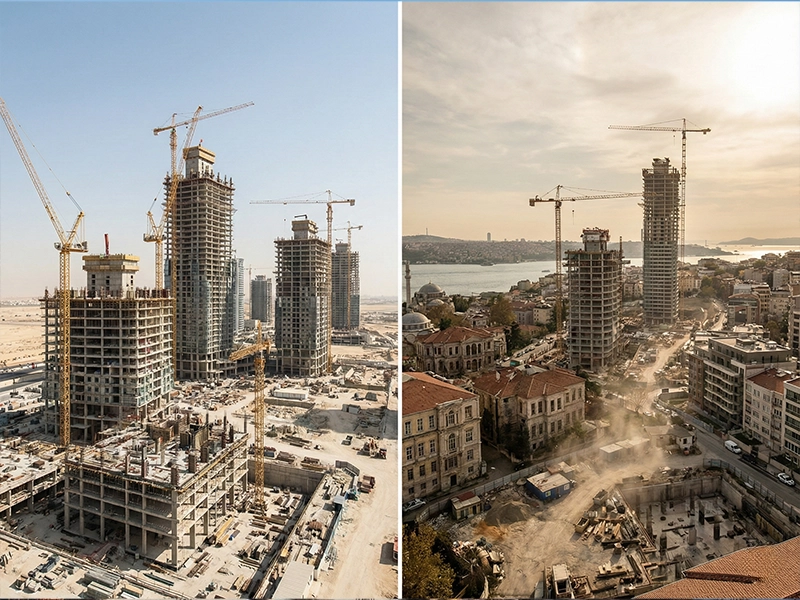
Off-plan property has become one of the most discussed real estate investment options in recent years, especially in fast-growing markets like Dubai and Istanbul.
Yet, despite its popularity, many investors still misunderstand what off-plan property actually means, how it works, and whether it is suitable for them in 2026.
This article explains the off-plan concept clearly, compares how it works in Dubai versus Istanbul, and outlines the benefits, risks, and key considerations every investor should understand before making a decision.
What Is Off-Plan Property and Why Investors Care in 2026?
Off-plan property refers to real estate purchased directly from a developer before construction is completed, or sometimes before construction has even started.
Investors are drawn to off-plan projects in 2026 because they often offer lower entry prices, flexible payment plans, and the potential for capital appreciation before handover. However, these advantages come with specific risks that vary significantly from one market to another.
How Off-Plan Property Works (Concept Explained)
What “Off-Plan” Really Means in Real Estate
When buying off-plan, the investor commits to a property based on architectural plans, project specifications, and delivery timelines rather than a finished unit.
Ownership is usually registered early in the process, while payment is spread over the construction period.
This model allows developers to fund construction while giving investors access to projects at earlier price levels.
How Payments, Construction, and Delivery Work
Payment Structure
Off-plan purchases typically follow staged payment plans linked to construction milestones rather than a single upfront payment.
This structure reduces the immediate capital burden on the buyer but extends financial exposure over time.
Construction Phase
During construction, the developer is responsible for meeting technical, legal, and delivery standards.
Progress is usually monitored by regulatory authorities, though the level of oversight varies by country.
Handover and Completion
At completion, the property is handed over to the buyer, who can then occupy, rent, or resell it.
Delays at this stage represent one of the main risks of off-plan investing.
Off-Plan vs Ready Property: Core Structural Differences
| Factor | Off-Plan Property | Ready Property |
| Purchase timing | Before completion | Fully built |
| Entry price | Usually lower | Usually higher |
| Payment method | Installments | Lump sum or mortgage |
| Rental income | After handover | Immediate |
| Risk level | Higher | Lower |
Off-Plan Property in Dubai (2026 Overview)
Why Off-Plan Is Popular in Dubai
Dubai has positioned off-plan real estate as a core pillar of its property market.
Strong developer regulation, high demand from expatriates, and a transparent sales process have made off-plan projects one of the most traded asset types in the city.
Typical Payment Plans in Dubai Off-Plan Projects
Low Initial Down Payments
Many projects offer down payments starting from 10%–20%, making entry more accessible to international investors.
Construction-Linked Installments
Payments are usually tied to verified construction milestones, reducing uncertainty for buyers.
Post-Handover Payment Options
Some developers extend payment plans beyond completion, allowing investors to generate rental income while continuing to pay.
Start a Conversation
Contact us through the communication method that suits you
Buyer Protections and Escrow Systems in Dubai
Dubai operates a mandatory escrow system that requires developers to deposit buyer funds into regulated accounts.
These funds can only be released according to construction progress, significantly reducing the risk of misuse or project abandonment.
| Aspect | Dubai |
| Escrow accounts | Mandatory |
| Developer regulation | Strong |
| Foreign ownership | Fully allowed in freehold areas |
| Market transparency | High |
Off-Plan Property in Istanbul (2026 Overview)
Why Investors Choose Off-Plan in Istanbul
Istanbul attracts off-plan investors primarily due to lower prices and long-term growth potential.
Rapid urban expansion, population growth, and infrastructure projects continue to reshape the city’s real estate landscape.
Common Pricing and Installment Structures
Lower Entry Prices
Off-plan units in Istanbul are often significantly cheaper than comparable ready properties in Dubai.
Flexible Installments
Developers frequently offer long installment periods, sometimes extending after delivery, particularly for domestic and regional buyers.
Legal and Market Considerations for Foreign Buyers
While foreign ownership is permitted, buyer protections depend heavily on the developer’s credibility and contract terms.
Regulatory oversight exists but is less standardized compared to Dubai, making due diligence essential.
| Aspect | Istanbul |
| Escrow systems | Limited |
| Developer regulation | Varies |
| Foreign ownership | Allowed with conditions |
| Currency exposure | High |
Dubai vs Istanbul: Off-Plan Investment Compared
Entry Cost and Capital Requirements
Dubai generally requires higher starting capital but offers more predictable outcomes.
Istanbul allows lower entry but exposes investors to greater variability in pricing and delivery quality.
Expected Capital Appreciation
Istanbul may offer stronger long-term appreciation in emerging districts, while Dubai focuses more on steady value growth supported by international demand.
Risk Level and Market Stability
| Criteria | Dubai | Istanbul |
| Market stability | High | Medium |
| Currency risk | Low | High |
| Delivery reliability | High | Variable |
| Legal clarity | Strong | Moderate |
Who Should Consider Off-Plan Property in 2026?
Off-Plan Is Suitable If You:
- Are investing with a medium- to long-term horizon
- Can tolerate delayed rental income
- Seek capital appreciation rather than immediate yield
Off-Plan May Not Be Ideal If You:
- Require immediate cash flow
- Prefer low-risk, fully predictable returns
- Lack experience in evaluating developers and contracts
Start a Conversation
Contact us through the communication method that suits you
Common Myths About Off-Plan Property
Is Off-Plan Always Risky?
Off-plan is not inherently risky, but risk depends heavily on regulation, developer credibility, and contract structure.
Is Off-Plan Always Cheaper?
While often cheaper initially, total costs may rise due to delays, fees, or market changes.
Can Foreigners Safely Buy Off-Plan in Dubai and Istanbul?
Yes, but safety levels differ significantly between the two markets.
Key Risks to Understand Before Buying Off-Plan
Construction Delays
Delays can affect both cash flow timing and expected returns.
Market Cycle Risk
Prices may fluctuate between purchase and handover, especially in volatile markets.
Developer Reliability
Project success depends largely on the developer’s financial strength and execution history.
Frequently Asked Questions (FAQ)
What does off-plan property mean in Dubai?
It refers to buying a property directly from a developer before completion, under regulated escrow and ownership frameworks.
Is off-plan property safe in Istanbul?
It can be safe with proper due diligence, but risk levels are generally higher than in Dubai.
Which is better in 2026: off-plan or ready property?
The answer depends on risk tolerance, capital availability, and investment horizon.
Can foreigners buy off-plan property in Dubai and Turkey?
Yes, foreigners can buy in both markets, subject to local regulations and ownership zones.
Start a Conversation
Contact us through the communication method that suits you
Final Thought: Is Off-Plan Property Worth Considering in 2026?
Off-plan property remains a powerful investment tool in 2026 when used correctly.
Dubai offers structure, protection, and predictability, while Istanbul offers affordability and long-term growth potential.
The right choice depends not on the market alone, but on how well the investment aligns with your financial goals and risk tolerance.