Owning property in Turkey can support a residence permit application, making it an attractive option for foreign investors and homeowners who want to stay in the country beyond short-term visas. However, obtaining a real estate residence permit in Turkey is not automatic. Approval depends on meeting specific legal, procedural, and documentation requirements that can vary depending on the applicant’s profile and the timing of the property purchase.
For many foreign buyers, this residence option is part of a broader strategy that combines lifestyle, long-term stay, and real estate investment in Turkey. At the same time, the process involves multiple steps, costs, and administrative checks that should be clearly understood before applying.
In this guide, we explain the documents, costs, eligibility basics, and application process for a real estate residence permit in Turkey in 2026, focusing on the standard framework used in most cases.
What do you need for a real estate residence permit in Turkey?
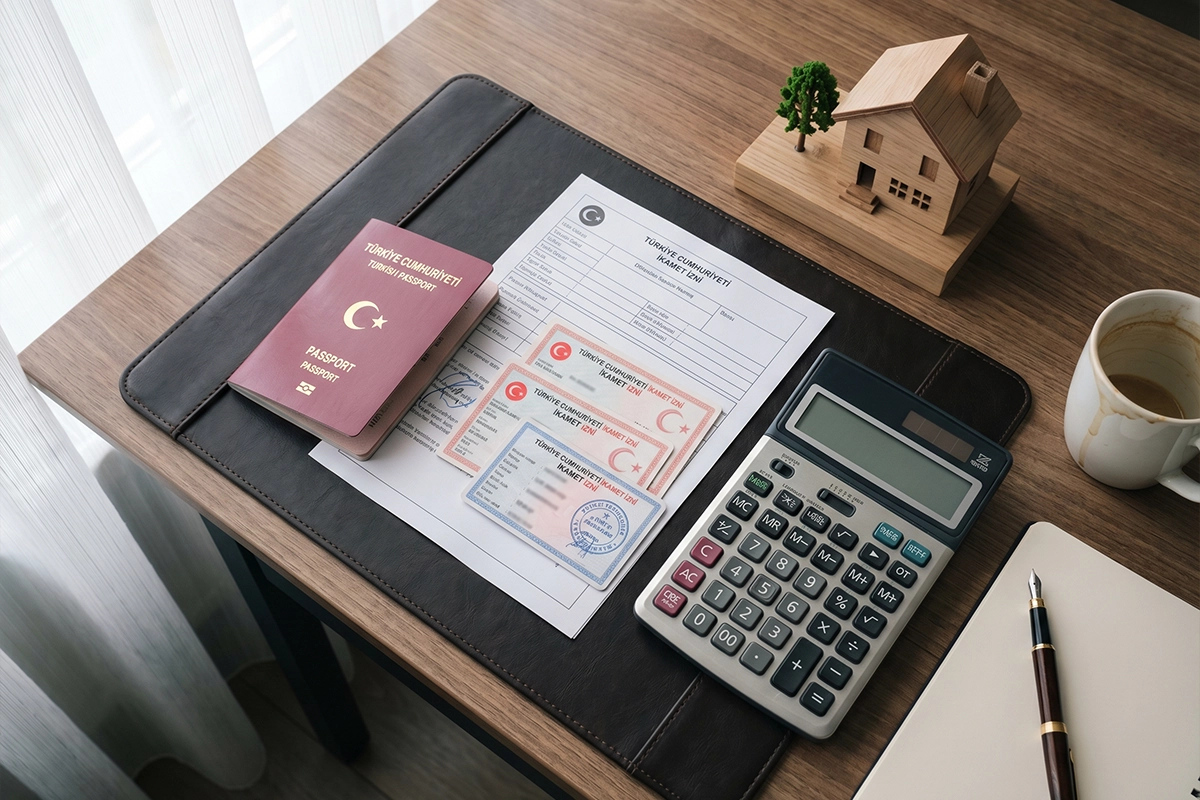
To apply for a real estate residence permit in Turkey, you generally need a valid passport, title deed (Tapu), address-related property documents, health insurance, biometric photos, and supporting application records. Total costs usually include government fees, insurance, translations, notarization, and, in some cases, property-related documentation expenses.
Who Can Apply for a Real Estate Residence Permit in Turkey?
Property Owners Applying for the First Time
Foreign nationals who own residential property in Turkey can apply for a residence permit based on property ownership. The property must be registered in the applicant’s name, and the application must be supported by official ownership documents.
While ownership is a key requirement, it does not guarantee approval. Authorities assess the full application file, including compliance with current regulations and documentation standards.
Renewal Applicants
Property owners who already hold a residence permit can apply for renewal before their permit expires. Renewal applications are evaluated based on continuity of ownership, updated documentation, and compliance with current rules at the time of renewal.
It is important to note that renewal conditions may differ from initial application conditions, particularly as regulations evolve.
Basic Eligibility Points to Check Before Applying
Before starting the process, applicants should confirm:
- The property is legally registered and suitable for residential use
- The ownership details match the applicant’s identity documents
- The application file complies with current immigration requirements
Eligibility rules can vary depending on purchase timing and updated regulations. For more complex or exception-based cases, additional review may be required.
What Documents Are Required?
Core Documents Most Applicants Need
Most applicants must prepare a standard set of documents, including:
- Valid passport
- Title deed (Tapu)
- Turkish tax number or related identification records
- Biometric photos
- Proof of address linked to the property
- Valid health insurance
These documents form the foundation of the application and must be accurate and consistent across all records.
Documents for First-Time Applications
First-time applicants may also need:
- Entry stamp or visa record
- Proof of financial means (in some cases)
- Application forms generated through the official system
The exact requirements may vary slightly depending on the applicant’s nationality and application location.
Documents for Renewals
For renewals, applicants typically submit:
- Existing residence permit card
- Updated address registration
- Valid health insurance
- Confirmation of continued property ownership
Any discrepancies between previous and current records may delay processing.
When Is a Property Valuation Report Required?
In some cases, authorities may request a property valuation report to verify the declared value and compliance of the asset. While not always mandatory for residence permits, it can be required depending on the file and administrative review.
How Much Does a Real Estate Residence Permit in Turkey Cost?
Government Fees
Applicants must pay official residence permit fees, which may vary depending on nationality, duration, and administrative updates.
Health Insurance Costs
Health insurance is mandatory and must cover the duration of the requested residence permit. Costs vary based on age, coverage level, and insurance provider.
Translation and Notarization Costs
Documents issued outside Turkey often need to be translated into Turkish and notarized. These costs depend on the number of documents and service providers.
Property-Related Costs Applicants May Face
Applicants may also encounter additional expenses such as:
- Address registration fees
- Document verification costs
- Possible valuation-related services
What Makes the Final Cost Vary?
The total cost of a real estate residence permit in Turkey depends on several factors, including:
- Applicant nationality
- Duration of the permit
- Number of documents requiring translation
- Insurance type and coverage
For this reason, total costs can vary from one applicant to another.
How Does the Application Process Work?
Prepare the Documents
The first step is gathering all required documents and ensuring they are accurate, complete, and properly formatted.
Secure Insurance
Applicants must obtain valid Turkish health insurance covering the requested residence period.
Book the Residence Permit Appointment
Applications are submitted through the official online system, where applicants schedule an appointment at the relevant immigration office.
Submit the Application File
During the appointment, the full file is submitted for review. Officers may request additional documents if needed.
Wait for Review and Decision
After submission, the application enters the review stage. Processing times may vary, but applicants are notified once a decision is made.
Common Mistakes to Avoid
Submitting Incomplete Documents
Missing or inconsistent documents are one of the most common reasons for delays or rejection.
Underestimating Total Costs
Focusing only on government fees without considering additional expenses can lead to financial miscalculations.
Using Inconsistent Property or Address Records
All documents must match in terms of names, addresses, and ownership details. Any mismatch can create complications.
Applying Without Checking Current Requirements
Regulations can change. Applying based on outdated information increases the risk of rejection.
Can You Apply Without a Consultant?
When a Self-Application May Be Enough
Applicants with straightforward cases, complete documentation, and familiarity with the process may be able to apply independently.
When Professional Help May Reduce Risk
In more complex situations—such as incomplete records, language barriers, or unclear eligibility—professional assistance can help reduce errors and improve the chances of approval.
FAQ
Can foreigners get a real estate residence permit in Turkey?
Yes, foreigners who own property in Turkey can apply for a residence permit, provided they meet current legal and documentation requirements.
What documents are needed for a property-based residence permit?
Applicants typically need a passport, title deed, photos, address documents, health insurance, and supporting application forms.
How much does a real estate residence permit in Turkey cost?
Costs vary depending on fees, insurance, translations, and other administrative expenses. The total amount differs by case.
How long does the application process take?
Processing times vary, but applications are usually reviewed within a few weeks after submission, depending on workload and documentation.
Can property owners renew their residence permit in Turkey?
Yes, property owners can apply for renewal. Renewal rules can depend on the property’s purchase date and the applicant’s file. For exception cases, see our detailed guide on renewing residency in Turkey under $200K.
Start a Conversation
Contact us through the communication method that suits you
Final perspective
A real estate residence permit in Turkey offers a practical pathway for foreign property owners to stay in the country, but it requires careful preparation and understanding of the process.
The success of your application does not depend on ownership alone—it depends on how well you prepare your documents, understand the costs, and follow the correct procedures.
In practice, the difference between approval and delay is rarely the system itself. It is the accuracy and completeness of the application submitted.
By approaching the process with clarity and preparation, applicants can navigate the system efficiently and reduce unnecessary risks.