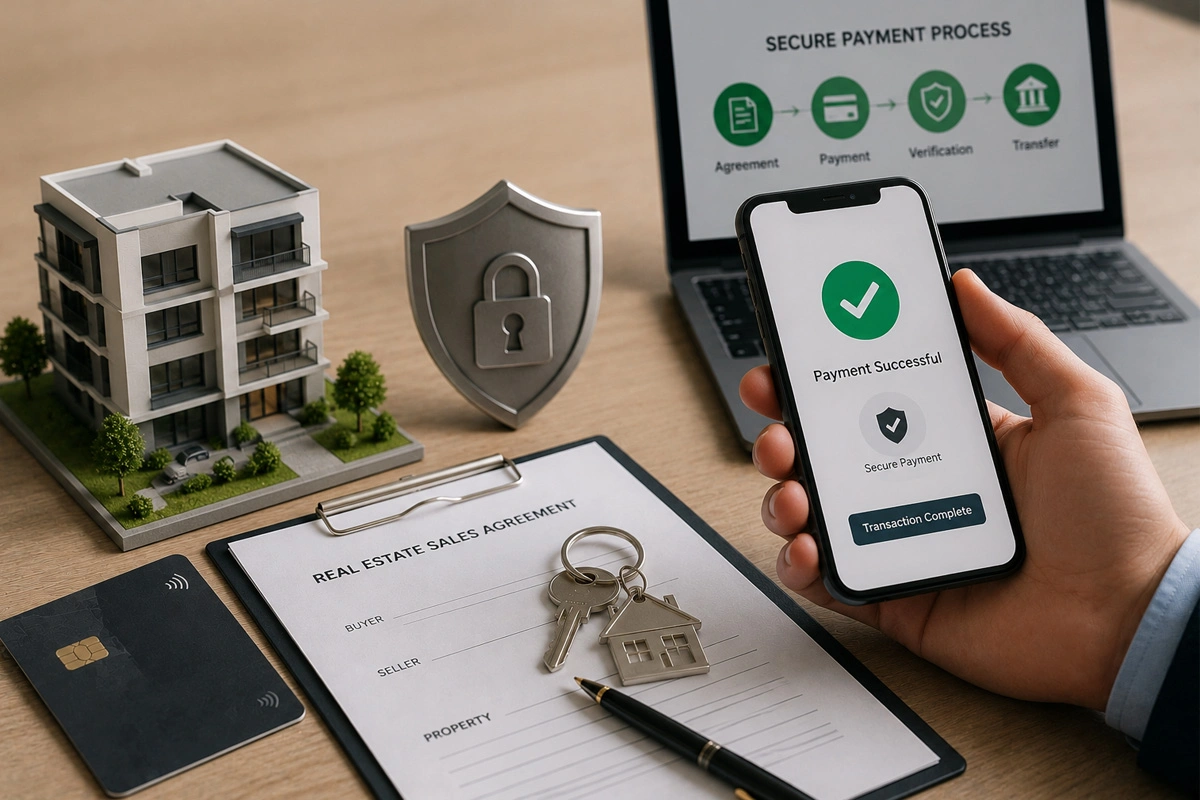
Turkey is introducing a major change to how real estate sale payments are handled. From 1 July 2026, the Secure Payment System, known in Turkish as Güvenli Ödeme Sistemi, is expected to become mandatory for property sales where all or part of the sale price is paid by cash, bank transfer, EFT, or other payment methods determined by the Ministry of Trade. The purpose is to make the payment and title deed transfer happen in a more synchronized, traceable, and secure way.
For foreign buyers, this change is important. Buying property in Turkey has traditionally involved several sensitive steps: signing a contract, transferring money, attending the Tapu appointment, and confirming that the title deed has been transferred correctly. The new system aims to reduce the risk of paying before receiving ownership, reduce cash-carrying risks, and make the real estate market more transparent.
The key point is simple: the buyer’s payment and the seller’s title deed transfer should become more closely linked. Instead of relying on informal arrangements or direct cash delivery, the payment will move through a controlled system designed to protect both parties.
What Is Turkey’s Secure Payment System for Real Estate Sales?
Turkey’s Secure Payment System is a regulated payment mechanism designed to make the transfer of the sale price and the transfer of property ownership happen together.
In a normal real estate transaction, the buyer wants to avoid paying before receiving the title deed, while the seller wants to avoid transferring ownership before receiving the money. This creates a trust gap. The Secure Payment System is designed to reduce that gap by placing the payment process inside a controlled framework.
The new rule in simple terms
Under the new rule, when a property sale price is paid fully or partly by cash, bank transfer, EFT, or other approved payment methods, the payment must go through the Secure Payment System. The system is designed so that the property ownership and the sale price change hands at the same time.
This means the buyer should no longer need to send the full sale amount directly to the seller before the Tapu transfer is completed. It also means the seller should have more confidence that the sale price is secured before transferring ownership.
Payment and title deed transfer must happen together
The main function of the system is synchronization. The sale price is processed through the secure payment infrastructure, and once the title deed transfer is completed, the seller receives the funds.
Legal commentary based on the 29 April 2026 regulation explains that the amount transferred into the system is held until the title deed registration is completed; if the transaction is cancelled, the amount is returned to the buyer.
Why Turkey is changing the payment process
The Ministry of Trade stated that property sale prices in Turkey have often been paid directly to the seller, including by hand. This can create informal transactions, payment disputes, insecurity between buyer and seller, high-value cash-carrying risks, theft risks, and fraud exposure. The new system is intended to reduce these risks and increase transaction security.
For foreign investors, this is a positive development because it moves Turkish property transactions closer to a more controlled and documented payment process.
Start a Conversation
Contact us through the communication method that suits you
When Does the Secure Payment System Become Mandatory?
The official implementation date is 1 July 2026.
This date matters because buyers, sellers, lawyers, real estate agencies, and banks will need to prepare transaction files differently after the system becomes mandatory.
Official implementation date: 1 July 2026
According to the Ministry of Trade announcement and Turkish press coverage based on the regulation, from 1 July 2026, when the property sale price is paid fully or partly by cash, bank transfer, or electronic fund transfer, the payment must be made through the Secure Payment System.
This means that property buyers planning to complete a transaction after this date should prepare their banking, transfer, and title deed timing earlier than before.
Can the date be extended?
Yes. The Ministry of Trade has the authority to extend the transition period by up to three months. Anadolu Agency reported that the payment system may remain optional for transactions completed before 1 July 2026 and that the Ministry may extend this date by three months.
This is important for investors because the exact operational timeline may still depend on technical preparation, official implementation guidance, and how banks and title deed offices integrate the system.
Ask Orfali for the Legal and secure payment methods
The system is designed to work as a secure bridge between buyer, seller, bank, and title deed transfer.
Although practical implementation details may continue to be clarified by the Ministry and relevant institutions, the general logic is already clear: the buyer’s payment should be secured before ownership transfer, and the seller should receive the money after the Tapu transfer is completed.
Step 1: Buyer and seller agree on the property sale
Before the system is used, the buyer and seller should agree on the main commercial terms.
This includes:
Sale price Currency Payment method Deposit terms Tapu transfer date Responsibility for fees and taxes What happens if the transfer is delayed or cancelled
A clear sale agreement remains essential. The Secure Payment System controls the payment flow, but it does not replace a properly drafted property sale contract.
Step 2: Buyer transfers the sale amount through the secure system
The buyer transfers the sale price, or the relevant part of the sale price, into the Secure Payment System instead of paying the seller directly.
This is especially important for foreign buyers who may be transferring money from abroad or converting USD, EUR, or another foreign currency into Turkish lira.
Step 3: The amount is held until Tapu transfer
The payment is held in the system until the title deed transfer is completed. The system is designed to prevent the buyer from losing money without receiving ownership and to prevent the seller from transferring title without receiving the sale price.
Step 4: Payment is released after ownership transfer
Once the title deed transfer is registered, the sale price is released to the seller. Anadolu Agency reported that the system is designed to ensure that the property ownership and sale price change hands simultaneously.
This should make the final Tapu stage more secure for both sides.
Step 5: If the transaction fails, money is returned
If the transaction cannot be completed, the money should not simply remain with the seller. Legal commentary based on the regulation explains that if the transaction is cancelled, the amount transferred into the system is returned to the buyer.
This is one of the most important buyer-protection features of the system.
The new regulation applies broadly to real estate sales where certain payment methods are used.
It is not limited only to residential apartments or only to agency transactions. The language of the regulation covers real estate transactions by businesses and other real or legal persons, with payments made fully or partly by cash, bank transfer, EFT, or other approved methods.
Residential property sales
The system will affect apartment and residential home sales when the sale price is paid through the covered payment methods.
This includes many standard transactions involving foreign buyers purchasing apartments in Istanbul, Antalya, Bursa, Izmir, or other Turkish cities.
Land and plot sales
The system is also relevant for land and plot sales, including arsa and tarla transactions, where payment is made fully or partly through the covered methods.
Foreign buyers should be especially careful with land transactions because legal status, zoning, military clearance rules, and transfer restrictions may be more complex than standard apartment purchases.
Commercial property sales
Commercial property transactions may also fall within the system when the payment is made by covered methods.
This includes offices, shops, commercial units, and investment properties.
Cash, bank transfer, EFT, and credit-linked transactions
The regulation applies when all or part of the sale price is paid by cash, bank transfer, EFT, or other payment methods determined by the Ministry. If the sale price is partly financed by a bank, financing company, or savings finance company, the system applies to the non-credit portion of the payment.
This matters because many buyers use a mix of credit and personal funds. The non-credit part should still be planned according to the Secure Payment System rules.
Turkey is introducing the Secure Payment System to make property sales safer, more transparent, and less dependent on informal cash practices.
The change is part of a broader effort to protect buyers and sellers, reduce disputes, and limit unrecorded payment behavior in real estate transactions.
To protect buyers from payment risk
A buyer’s biggest fear is paying the sale price and then facing a problem with the title deed transfer.
This can happen if there is a legal restriction, missing document, mortgage issue, title deed problem, identity mismatch, or seller-side complication. The Secure Payment System is designed to reduce the risk of the buyer losing control over funds before ownership is transferred.
To protect sellers from non-payment risk
Sellers also face risk. A seller may fear transferring title before the payment is actually received or may worry about fake receipts, delayed transfers, or payment disputes.
By securing the sale price inside the system, the seller gains more confidence before completing the Tapu transfer.
To reduce fraud in real estate transactions
The Ministry of Trade specifically connected the reform to fraud, theft, payment disputes, and unrecorded transactions. The system is intended to reduce the need for high-value cash movement and make the payment process safer.
This is especially important in high-value property transactions where manual cash delivery or informal payment arrangements can create serious risk.
To increase transparency in the property market
More traceable payment flows should support a more transparent property market.
When the sale price is processed through a regulated system, it becomes harder to rely on informal or unclear payment arrangements. This may also support stronger compliance standards in the real estate sector.
To limit disputes between buyer and seller
Many disputes in property sales come from timing: should the buyer pay first, or should the seller transfer the title deed first?
The Secure Payment System is designed to reduce this conflict by aligning the two steps.
For foreign buyers, the new system should provide more protection, but it may also require more preparation.
Foreign buyers often deal with additional layers: international bank transfers, foreign currency conversion, tax numbers, translated documents, passport data, power of attorney, and sometimes citizenship or residence permit objectives.
More protection during the buying process
The most important benefit is that the buyer should not need to transfer large sums directly to the seller before receiving title deed ownership.
This can make the transaction feel safer, especially for foreign buyers who are not familiar with Turkish real estate practices.
More documentation may be required
A more formal payment system usually means stronger documentation.
Foreign buyers should expect banks, advisors, and transaction parties to pay closer attention to:
Source of funds Passport and tax number Bank account details Currency conversion Transfer timing Buyer identity verification Contract and Tapu appointment details
This is not necessarily a negative development. It means the transaction becomes more professional, but it also means buyers must prepare earlier.
Non-resident buyers may need earlier preparation
Non-resident buyers may face delays when opening bank accounts, transferring money from abroad, or converting foreign currency.
Buyers who plan to complete a Tapu transfer after 1 July 2026 should not wait until the appointment week to organize payment. Bank account setup, money transfer, compliance questions, and payment instructions should be handled in advance.
Foreign currency buyers should plan exchange timing carefully
Many foreign buyers agree on a property price in USD or EUR, while official transaction steps may involve Turkish lira.
This creates exchange-rate questions. The buyer and seller should clarify:
Which currency is used in the contract When conversion will happen Which exchange rate source applies Who carries exchange-rate risk Whether the final payment enters the Secure Payment System in Turkish lira or another permitted method
This should be written clearly in the sale agreement before the Tapu appointment.
What Does This Mean for Foreign Sellers?
The system also affects sellers, including foreign owners selling property in Turkey.
A seller should understand that the sale price may be released only after the title deed transfer is completed through the system.
Sellers may receive payment only after title transfer is completed
The seller should not expect the buyer to hand over large cash amounts before the Tapu transfer.
Instead, the payment will move through the secure system, and the seller receives the funds once the transfer is completed.
The seller’s bank and identity details must be correct
Payment release depends on correct information.
Foreign sellers should make sure their Turkish tax number, passport information, bank account, title deed details, and power of attorney documents are aligned before the transaction.
Any mismatch may delay the process.
Mortgage, lien, or legal restrictions must be cleared early
If the property has a mortgage, lien, seizure, municipality issue, citizenship resale restriction, or other legal problem, the Tapu transfer may be delayed.
A delayed transfer can also delay the release of funds.
This makes pre-sale legal review more important than before.
How Could This Change Real Estate Transactions in Turkey?
The Secure Payment System may change real estate transactions in Turkey in several practical ways.
The biggest change is that payment planning becomes part of the official transfer process, not just a private arrangement between buyer and seller.
Less reliance on cash payments
The system should reduce the role of informal cash payments at or before the Tapu appointment.
This is important because large cash movement creates theft risk, proof problems, and disputes.
Stronger banking involvement in property sales
Banks and approved payment institutions may become more central to real estate transactions.
Buyers and sellers should be prepared for a more banking-driven process, including identity checks, transaction references, account verification, and compliance review.
More transparent transaction records
The system should create clearer payment records.
For foreign buyers, this may be useful later when proving payment history for citizenship, resale, tax, or legal purposes.
More professional transaction management
Real estate agencies, lawyers, advisors, and sellers will need to prepare payment files earlier.
This will reduce the space for last-minute informal arrangements and increase the need for professional coordination before the Tapu appointment.
Challenges Foreign Investors Should Expect
The system is designed to improve safety, but it may create short-term adjustment challenges.
Foreign buyers should treat the new rule as a preparation issue, not as a reason to avoid the market.
Bank account opening and transfer delays
Non-resident buyers may need additional time to open accounts, transfer funds internationally, and complete bank compliance checks.
This is especially relevant for buyers from countries with stricter transfer controls or documentation requirements.
Source of funds documentation
Banks may ask for proof of where the money came from.
This could include sale agreements, salary records, company documents, bank statements, inheritance documents, investment liquidation records, or other evidence depending on the buyer’s profile.
Currency conversion timing
Currency conversion should not be left until the last minute.
A buyer agreeing in USD but needing to pay in Turkish lira should confirm exchange timing, bank rates, transfer limits, and payment instructions before the Tapu date.
Coordination between buyer, seller, bank, and Tapu office
The transaction becomes safer, but more procedural.
The buyer, seller, bank, lawyer, real estate advisor, and Tapu office should work from one clear timeline.
Practical Checklist Before Buying Property Under the New System
The Secure Payment System makes preparation more important. Buyers and sellers should not wait until the title deed appointment to organize documents and money.
Buyer checklist
Before the Tapu appointment, the buyer should confirm:
Turkish tax number
Valid passport
Bank account or payment access
Source of funds documents
Currency conversion plan
Sale agreement
Payment amount and currency
Tapu appointment timing
Secure Payment System process
Power of attorney, if buying remotely
Seller checklist
The seller should confirm:
Title deed details
Valid identity or passport
Turkish tax number
Bank account details
No mortgage or lien issue
No citizenship resale restriction
No unresolved inheritance or ownership issue
Municipality-related obligations
Power of attorney, if selling remotely
Contract checklist
The property sale contract should clearly mention:
Sale price
Currency
Payment method
Deposit status
Tapu transfer date
Refund conditions
Cancellation rules
Responsibility for fees
What happens if the transfer fails
How exchange-rate differences are handled
Advisor checklist
The real estate advisor or lawyer should coordinate:
Buyer documents
Seller documents
Banking process
Tapu appointment
Contract terms
Legal due diligence
Payment timing
Post-transfer registration and tax issues
Start a Conversation
Contact us through the communication method that suits you
How to Pay Property Tax in Turkey After Buying Property
This is related to the property-buying journey, but it is not part of the Secure Payment System.
The Secure Payment System controls the sale price paid from buyer to seller during the title deed transfer. Property tax, known as Emlak Vergisi, is a separate municipal obligation after property ownership.
Property tax is separate from the Secure Payment System
The Secure Payment System does not replace annual property tax payments.
After buying property in Turkey, the owner should check property tax obligations with the relevant municipality where the property is located.
Where property tax is paid
Property tax is generally handled by local municipalities. The official e-Devlet municipal services page lists municipality services such as property tax declaration, debt transactions, declaration information, and property tax notification or assessed value inquiries where integrated municipalities provide these services.
Some municipalities also provide direct online payment channels. For example, Beylikdüzü Municipality lists payment through its own online system, e-Devlet, and internet banking as available payment channels, while Kadıköy Municipality lists e-municipality, PTT, and contracted banks for tax debt payments.
When property tax is usually paid
Property tax in Turkey is commonly paid in two installments. Beşiktaş Municipality states that property tax is paid to local municipalities in two installments: the first between March and May, and the second in November.
Foreign property owners should confirm exact payment timing and channels with the municipality of the property, because municipal systems and online access may vary by district.
Why this matters before selling later
Unpaid municipal obligations can create problems during a future sale.
Before reselling a property, sellers should check municipal tax status, title deed details, DASK insurance, and any other property-related obligations. This is separate from the Secure Payment System but still part of a clean real estate transaction.
Final Takeaway: Safer Transactions, But More Preparation Required
Turkey’s Secure Payment System is a major step toward safer and more transparent real estate transactions.
For buyers, the system reduces the risk of paying before receiving ownership. For sellers, it reduces the risk of transferring title before receiving the sale price. For the market, it supports traceable payment flows and reduces reliance on informal cash arrangements.
For foreign investors, the change is positive but requires better preparation. Bank transfers, source-of-funds documents, exchange-rate planning, title deed checks, contract terms, and Tapu coordination will become more important.
The system protects the payment stage, but it does not replace professional legal review. A safe property purchase in Turkey still requires due diligence, a clear contract, correct documents, and proper coordination between buyer, seller, bank, advisor, and Land Registry office.
FAQ
What is the Secure Payment System in Turkey?
The Secure Payment System is a regulated payment mechanism for real estate sales. It is designed to make the property sale price and title deed ownership transfer happen together, reducing payment and title transfer risk.
When does it become mandatory for real estate sales?
The system is expected to become mandatory from 1 July 2026 for real estate sales where all or part of the sale price is paid by cash, bank transfer, EFT, or other approved methods. The Ministry of Trade may extend the transition period by up to three months.
Does the system apply to foreign buyers?
Yes. The rule concerns real estate sale payments in Turkey. Foreign buyers should expect the system to apply when they purchase property under the covered payment methods.
Does the buyer pay the seller directly?
Under the Secure Payment System, the buyer does not simply pay the seller directly before Tapu transfer. The payment goes through the secure system and is released to the seller when the title deed transfer is completed.
What happens if the Tapu transfer fails?
If the transaction is cancelled or cannot be completed, legal commentary based on the regulation explains that the amount transferred into the system is returned to the buyer.
Can the buyer use foreign currency?
Foreign buyers may agree prices in foreign currency, but the contract and payment process should clarify conversion, exchange rate, transfer timing, and whether the Secure Payment System will process the relevant amount in Turkish lira or another permitted payment structure.
Will this system make buying property in Turkey safer?
Yes, it should make transactions safer by reducing payment disputes, cash-carrying risk, fraud exposure, and informal arrangements. However, it does not remove the need for legal due diligence.
Does this replace legal due diligence?
No. Buyers still need to check title deed status, valuation, zoning, debts, mortgages, liens, seller authority, power of attorney, and citizenship eligibility if relevant.
Does the Secure Payment System include property tax payments?
No. The system relates to the sale price between buyer and seller during title deed transfer. Property tax is a separate municipal obligation and should be paid through the relevant municipality’s channels.
How do I pay property tax in Turkey after buying property?
Property tax is usually paid to the municipality where the property is located. Depending on the municipality, payment may be possible through the municipal office, the municipality’s online system, e-Devlet, contracted banks, or PTT. e-Devlet lists municipality services related to property tax and debt transactions for integrated municipalities.
What should foreign investors prepare before July 2026?
Foreign investors should prepare bank accounts, tax numbers, passport documents, source-of-funds evidence, payment plans, exchange-rate agreements, sale contracts, and legal due diligence before the Tapu appointment.