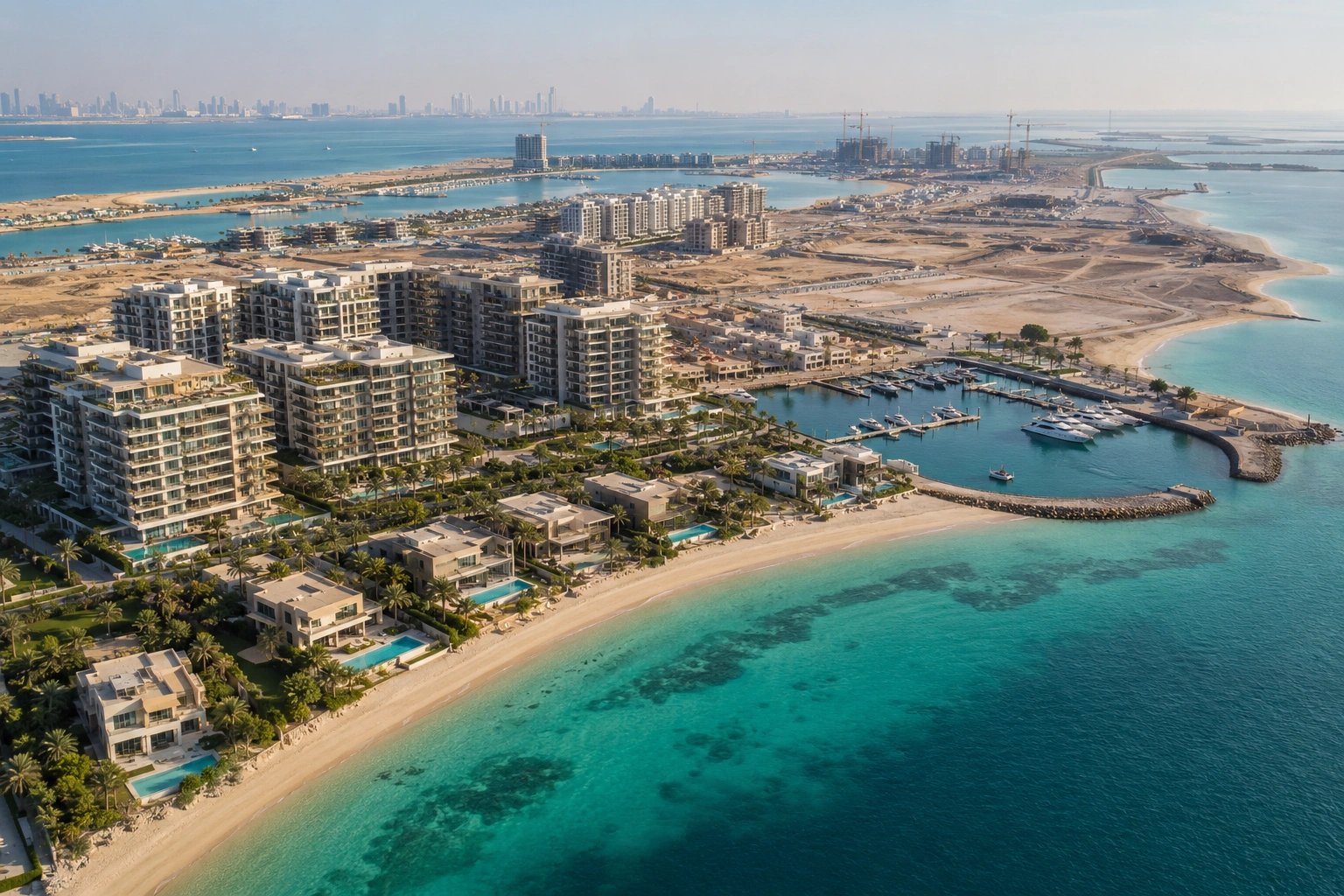
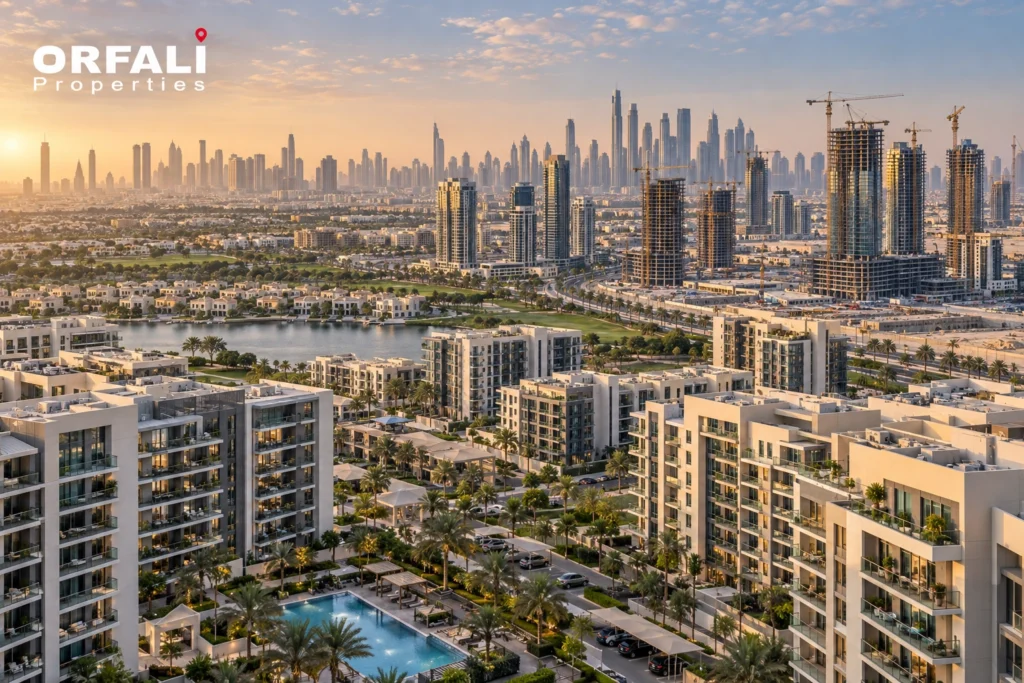
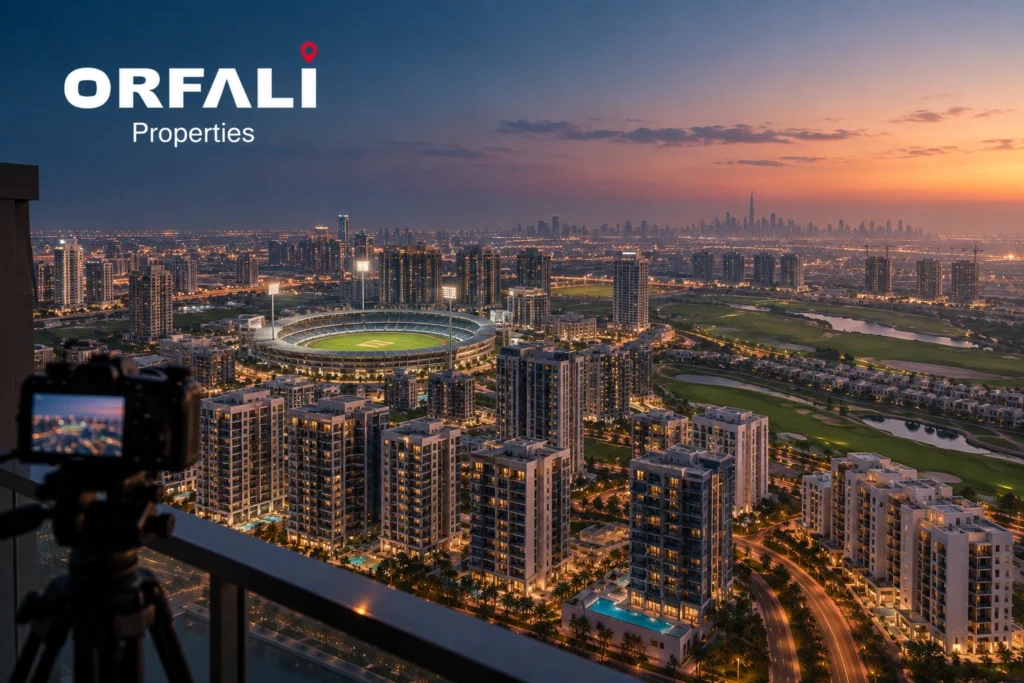
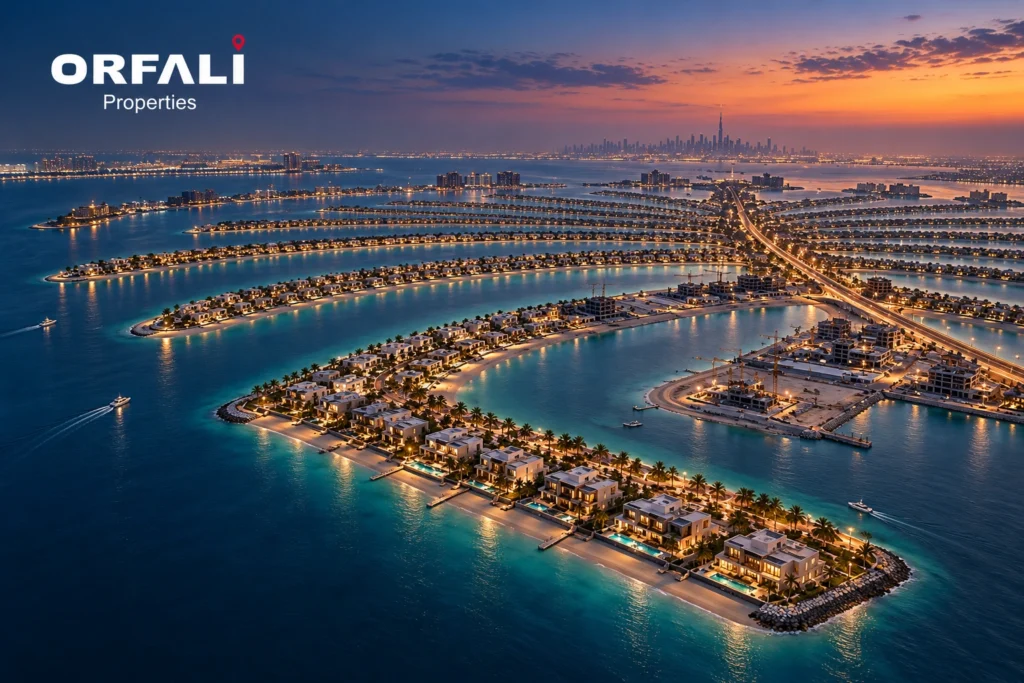
Dubai Islands is becoming one of Dubai’s most active waterfront property markets, but investors are buying into a destination that is still being built. The masterplan covers five islands, 17 square kilometres and more than 20 kilometres of beaches, with future hotels, resorts, residential communities, marinas, parks and golf facilities planned across the destination.
That scale creates significant long-term potential, but it also makes project selection more important. Transaction-based estimates in 2026 place Dubai Islands broadly around AED 2,700 per square foot, although actual prices vary substantially between standard apartments, prime sea-facing units, branded residences and villas. More importantly, thousands of additional homes remain in the development pipeline.
For investors, this creates two competing forces. New infrastructure, hospitality, beaches and community development could strengthen demand and support property values as Dubai Islands matures. At the same time, a large off-plan pipeline can create competition for tenants and resale buyers, particularly where similar apartment products are delivered at the same time.
The investment decision should therefore go beyond whether Dubai Islands will become a major waterfront destination. Buyers need to determine whether today’s entry price is justified, how much they are paying for the waterfront premium, what competing supply will exist at handover, and whether the property can attract tenants or resale buyers without relying entirely on future appreciation.
What Is the Dubai Islands Masterplan and Why Does It Matter to Property Investors?
Dubai Islands is a five-island waterfront master development along Dubai’s northern coastline.
The masterplan covers approximately 17 square kilometres and includes more than 20 kilometres of beaches, around two square kilometres of parks and open spaces, waterfront promenades, marinas and golf facilities overlooking the Arabian Gulf.
More than 80 hotels and resorts are planned across the destination, including luxury, boutique, family, wellness and other hospitality concepts. The islands are also designed to incorporate residential, retail, leisure and cultural components rather than operate solely as a collection of beachfront apartment buildings.
This distinction matters for property investors.
Waterfront communities tend to become more resilient when residents have reasons to remain in the area beyond the view from their apartment. Hotels can generate visitor traffic, retail and restaurants support daily activity, beaches improve lifestyle appeal, and parks and community infrastructure can increase the attractiveness of the area to end users.
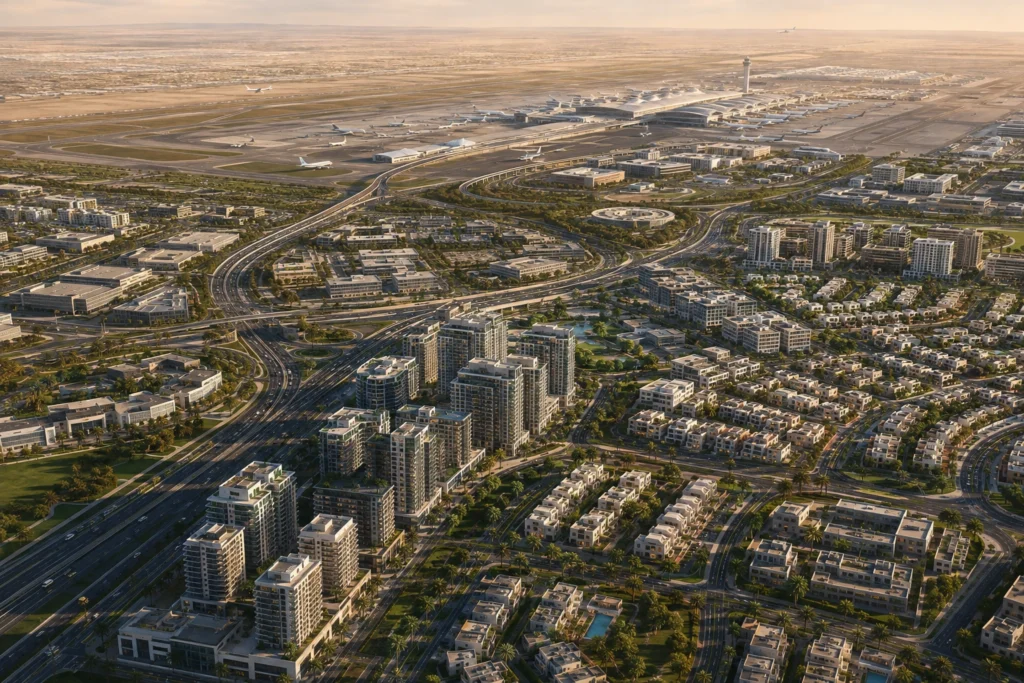
Dubai Islands also benefits from its position on Dubai’s northern coastline. The master developer places the destination within approximately 20 minutes of Downtown Dubai, while access through Infinity Bridge connects the islands with the wider city. Dubai International Airport is also relatively close compared with many newer coastal developments farther from central Dubai.
For investors, however, the masterplan should be viewed as a long-term value framework rather than a guarantee of individual property performance.
A five-island destination can create substantial value as it matures, but it can also accommodate substantial future residential supply.
The question is therefore not only what Dubai Islands will eventually contain. Investors also need to understand what will exist around their property when it is handed over.
Start a Conversation
Contact us through the communication method that suits you
Dubai Islands has moved well beyond its earlier positioning as an emerging waterfront area.
Transaction-based market analysis for Q3 2026 places the median residential price at approximately AED 2,710 per square foot, based on Dubai Land Department transaction data. More than 5,200 transactions were recorded over the preceding 12 months in that dataset.
Another transaction-based index covering a broader registered-unit dataset places the current level higher, at approximately AED 3,465 per square foot, with more than 10,000 registered sales and a typical transaction value around AED 5.74 million.
The difference between these figures is important.
There is no single Dubai Islands price that can be applied to every investment. Different datasets use different project mixes, unit sizes and methodologies, while the market itself contains everything from relatively accessible apartments to large waterfront homes and premium branded residences.
The more useful approach is to compare the property being considered with similar transactions within its own product category.
Dubai Islands Apartment Prices
Q3 2026 transaction analysis shows substantial variation by apartment size.
Studio transactions were broadly recorded between approximately AED 976,000 and AED 2.34 million, with a median around AED 1.17 million.
One-bedroom apartments ranged much more widely, from approximately AED 620,000 to AED 5.67 million, with a median around AED 2.31 million.
Two-bedroom apartments ranged from approximately AED 1.05 million to AED 13 million, with a median around AED 3.47 million.
Those wide ranges demonstrate why headline starting prices are not enough for an investment decision.
A compact inland-facing apartment and a larger residence with an unobstructed waterfront position may technically have the same bedroom count while targeting completely different buyers.
Investors should therefore compare price per square foot, internal area, balcony size, floor, orientation, view, payment structure and expected handover date rather than bedroom count alone.
Apartments vs Villas in Dubai Islands: Which Is Better for Investment?
Apartments and villas in Dubai Islands serve different investment strategies.
Apartments generally offer a lower capital requirement and a broader potential rental market. Villas require substantially more capital but provide greater scarcity and can appeal more strongly to wealthy end users looking for beachfront family homes.
Apartments: Lower Entry Price and Broader Rental Demand
Apartments currently represent much of the visible development pipeline across Dubai Islands.
The market includes one-, two- and three-bedroom apartments, larger residences, duplexes and penthouses across a growing number of waterfront projects.
For an investor focused on rental income, a well-priced one-bedroom or two-bedroom apartment may offer a more straightforward strategy than a highly specialised luxury unit.
The potential tenant base can include professionals, couples, families, long-stay visitors and residents who want waterfront living without paying the acquisition or rental cost associated with Dubai’s most established premium coastal communities.
Apartments also make diversification easier. An investor with AED 8 million, for example, could potentially acquire several apartments rather than committing the entire budget to one large villa.
However, apartments face the greatest future supply risk.
As more developers enter Dubai Islands, buyers may eventually find multiple projects competing for the same tenant profile at similar prices.
A sea view alone will not differentiate every apartment once thousands of residents have access to waterfront living.
Villas: Higher Entry Price but Greater Scarcity
The villa investment case is different.
The master developer’s current Dubai Islands portfolio includes Bay Villas, alongside apartment-focused developments and resort residences. Current market tracking places entry prices for Dubai Islands townhouses and villas from approximately AED 4 million, although larger and better-positioned homes can cost substantially more.
The potential advantage is scarcity.
A large beachfront or near-beach villa with private outdoor space is structurally different from an apartment in a tower containing hundreds of units. If Dubai Islands develops into a successful luxury residential and tourism destination, high-quality villas may appeal to a deeper end-user market.
That can matter for resale.
Luxury buyers purchasing homes for their own use often evaluate privacy, plot position, beach access, layout and community quality differently from investors comparing apartment yields.
The disadvantage is the larger ticket size and potentially lower percentage rental return.
For that reason, villas generally make more sense for investors prioritising capital preservation, scarcity and long-term appreciation rather than maximum rental yield.
Which Dubai Islands Projects Should Property Investors Compare?
Dubai Islands has rapidly developed into a multi-developer market.
Current property portals list well over 100 projects or project phases across the destination, while one major portal counted more than 150 new-project listings by September 2026. The exact number depends on whether separate phases are counted individually, but the direction is clear: investors now have a large and expanding choice of off-plan stock.
This is useful for buyers because developers must compete on price, design, payment plans, amenities and product quality.
It also makes due diligence more important.
Master-Developer Projects
The master developer’s own residential portfolio provides one useful benchmark for Dubai Islands pricing and positioning.
Bay Grove Residences includes one-, two- and three-bedroom apartments as well as larger duplexes and penthouses. Current market tracking places entry prices around AED 1.85–1.9 million, depending on availability and phase.
The development is positioned around waterfront living with terraces, communal amenities and access to the wider Dubai Islands destination.
Bay Villas targets a different buyer through townhouses and villas, with market-tracked starting prices around AED 4 million.
The islands also include resort-linked residential products, demonstrating the range of property types being introduced across the masterplan.
For an investor, these projects can serve as useful reference points when evaluating other launches.
The question is not necessarily whether a project belongs to the master developer. It is whether another project charging a similar or higher price provides enough additional value through its waterfront position, specifications, layout, branding or payment terms.
Independent Developer Projects
A growing number of developers are launching projects across Dubai Islands.
This creates opportunities at different entry points, but investors need to compare more than the brochure.
Some projects offer smaller units at lower absolute prices. Others position themselves as boutique luxury residences, branded developments or low-density waterfront buildings and charge substantial premiums.
Two projects separated by only a short distance can therefore have very different investment profiles.
Before choosing a project, compare:
actual price per square foot rather than only the starting price;
usable internal area and layout efficiency;
direct waterfront, sea view or secondary location;
total number of units in the building;
surrounding plots and future construction;
service-charge expectations;
developer delivery record;
payment plan and handover date;
competing projects scheduled for the same completion period.
A payment plan can improve cash-flow flexibility, but it does not make an expensive property inexpensive.
The investment still needs to work at the full purchase price.
How Much Waterfront Premium Should You Pay in Dubai Islands?
Waterfront property normally commands a premium because the underlying feature is scarce.
A genuine beachfront position cannot easily be reproduced inland. An unobstructed sea view can increase both lifestyle appeal and resale demand, particularly among end users.
Dubai Islands is specifically designed around that advantage, with more than 20 kilometres of beaches and an extensive coastal environment.
But investors need to distinguish between different types of “waterfront.”
A property directly facing an accessible beach is different from a unit overlooking water from several rows behind it.
A permanent open sea view is different from a view across a development plot where another building may eventually rise.
A residence with direct beach access is also different from an apartment where the beach exists somewhere within the wider master community.
These differences should be reflected in the price.
When Is a Waterfront Premium Justified?
A premium becomes easier to justify when the feature is both scarce and defensible.
Consider two comparable two-bedroom apartments.
If Property A costs AED 3.0 million and Property B costs AED 3.8 million, the second property carries an AED 800,000 premium.
That additional AED 800,000 needs an investment justification.
Will Property B achieve materially higher rent?
Will its view remain unobstructed?
Is the building lower density?
Does it have direct beach access?
Would an end user be willing to pay a similar premium when the investor sells?
If the answer to those questions is weak, the investor may simply be paying more for marketing.
The same principle applies to branded residences.
Branding, hospitality services and premium finishes can improve desirability, but a higher purchase price can reduce rental yield and create a higher resale benchmark that the next buyer must also accept.
The waterfront premium should therefore be evaluated through rent, scarcity and future resale demand, not simply through the launch price.
What Rental Yield and ROI Can Dubai Islands Investors Expect?
This is where Dubai Islands requires more caution than an established rental community.
The destination remains heavily weighted toward properties under construction, so the number of completed and occupied units is still limited relative to the development pipeline.
One transaction-based database currently identifies approximately 22,370 registered units, while only 357 Ejari rental contracts are included in its current rental dataset. Its calculated gross yield is approximately 2.2%, but that number should not be interpreted as a mature-area benchmark because the rental sample remains small compared with the registered property base.
A separate Q3 2026 DLD-based analysis estimates Dubai Islands gross yield around 4.0%, again illustrating how methodology and the limited maturity of the rental market can produce substantially different results.
This makes projected yields of 6%, 7% or higher particularly important to verify before purchasing.
Projected Rental Yield Is Not Current Rental Yield
Suppose an investor buys a one-bedroom apartment for AED 2.2 million and is shown a projected annual rent of AED 140,000.
That produces a gross yield of approximately 6.4%.
But if the achievable rent after handover is AED 115,000, gross yield falls to approximately 5.2%.
Then service charges, maintenance, vacancy and property-management expenses need to be deducted.
The net return could be considerably lower.
This does not make the property a bad investment. A premium waterfront property may produce a lower rental yield while generating stronger capital appreciation.
It simply means the investor should know which return they are buying.
An income-focused buyer should be more sensitive to price-to-rent ratios and service charges.
An appreciation-focused buyer may accept a lower yield if the property has genuine scarcity, a strong waterfront position and a realistic future end-user market.
Can Dubai Islands Property Prices Continue to Appreciate?
Dubai Islands has several characteristics capable of supporting long-term property values.
The destination has a large waterfront masterplan, proximity to established Dubai, extensive beaches, planned hospitality and leisure infrastructure, and an increasing number of residential projects.
Current transaction data also indicates that investors have already repriced the location significantly.
One DLD-based index currently records price per square foot approximately 36% higher year-on-year across its Dubai Islands dataset.
That is positive for existing owners, but new buyers should interpret rapid appreciation carefully.
The faster prices rise before a community is fully completed, the more future development may already be reflected in today’s purchase price.
An investor entering after substantial appreciation should therefore avoid simply extrapolating the previous year’s growth.
A 30% increase in the past does not establish another 30% increase in the future.
Future Appreciation Should Come From Community Maturity
The healthier long-term investment case is based on the destination gradually becoming more complete.
More residents move in.
Hotels open.
Retail and restaurants increase.
Beaches and public areas become active.
Road connections and internal infrastructure mature.
The rental market becomes easier to measure.
End users become more willing to buy because they can experience the community rather than imagine it from a masterplan.
Those changes can reduce development uncertainty and support resale prices.
Investors buying in 2026 are effectively purchasing somewhere between the off-plan development stage and the future mature-community stage.
The amount paid for that transition determines how attractive the opportunity is.
Check the latest project at Dubai Islands
Meriden Beach Residences
WESTON
HADO at SIORA Dubai
check now
How Much Future Property Supply Is Coming to Dubai Islands?
Future supply is probably the most important risk investors should analyse before buying.
Transaction-based project data currently identifies approximately 22,370 registered units across Dubai Islands, including more than 1,000 villas. Another DLD-derived Q3 2026 analysis identifies roughly 5,260 completed units against approximately 14,390 units in the pipeline, although figures vary depending on project registration and methodology.
Property portals also show a large number of active off-plan projects.
This confirms that Dubai Islands is not a low-supply market overall.
However, headline supply numbers do not determine the performance of every property.
The relevant question is how much directly competing supply exists.
A one-bedroom apartment should be compared with similar one-bedroom apartments delivering nearby.
A beachfront villa should be compared with other villas offering similar beach access, plot sizes and price points.
A branded residence should be compared with other premium or branded products targeting the same buyer.
Supply Risk Is Highest When Projects Look the Same
Imagine five buildings delivering within the same year.
All contain one-bedroom apartments of similar size.
All offer swimming pools, gyms and modern interiors.
All market themselves as luxury waterfront residences.
When investors in those buildings attempt to rent or sell at the same time, tenants and buyers have substantial negotiating power.
The situation is different for a genuinely scarce unit: a large beachfront villa, an exceptional penthouse, a low-density residence or an apartment with a protected view and highly efficient layout.
Investors should therefore ask not only how many units are coming to Dubai Islands, but how many future units can replace the exact property they are buying.
Resale performance is often overlooked when investors buy off-plan property.
During the launch stage, buyers focus on developer pricing, payment plans and projected appreciation.
At resale, the buyer compares the property with everything else available at that time.
That includes ready properties.
If an investor buys a one-bedroom apartment for AED 2.3 million and wants to sell it for AED 2.8 million after handover, the next buyer will ask what AED 2.8 million can purchase elsewhere in Dubai Islands.
If newer units are available at AED 2.5 million, the resale becomes more difficult.
If comparable properties have reached AED 3 million and the community has matured, the position becomes stronger.
End-User Demand Matters
The strongest resale markets are not dependent entirely on investors selling to other investors.
Dubai Islands has the potential to attract end users because it combines waterfront living with proximity to older central parts of Dubai and Dubai International Airport.
As hotels, beaches, retail, restaurants and community infrastructure mature, the area may become more attractive to residents purchasing for their own use.
That can particularly benefit properties with practical layouts, larger living spaces, good views, direct beach access and family-oriented characteristics.
An investor should therefore ask a simple question before buying:
Who is likely to buy this property from me in five years?
If the only answer is another off-plan investor expecting further appreciation, the resale thesis is relatively weak.
If the property could also appeal to a family, professional, second-home buyer or high-net-worth end user, the exit strategy becomes broader.
What Are the Main Risks of Investing in Dubai Islands?
Dubai Islands has a strong masterplan, but the destination’s early development stage creates risks that investors should price into their decisions.
Paying Too Much Too Early
A future waterfront destination can be highly valuable while still containing overpriced individual projects.
Investors sometimes assume that buying early automatically means buying cheaply.
That is not necessarily true.
If a new project launches significantly above comparable transactions because the developer is already pricing in future beaches, hotels, retail and community maturity, the buyer may be paying today for value that has not yet been delivered.
Large Future Supply
The number of projects under development means tenants and resale buyers may have significant choice as handovers increase.
Projects with generic layouts, high density or weak differentiation may face stronger competition.
Supply should therefore be evaluated at project and unit level rather than only across the whole destination.
Rental-Yield Uncertainty
Dubai Islands does not yet have the depth of rental history available in mature communities.
Rental projections should therefore be treated as assumptions rather than guaranteed income.
A conservative investment analysis should test the property at lower rents and higher vacancy than the developer’s marketing scenario.
Service Charges
Waterfront buildings with pools, landscaped areas, extensive amenities, private beaches or hospitality-style services can be expensive to operate.
High service charges reduce net rental yield.
They can also influence resale demand because the future buyer inherits those recurring costs.
Before buying, investors should calculate ROI using estimated net income after service charges, not headline gross rent.
Developer and Delivery Risk
The expansion of Dubai Islands has attracted many developers.
That creates choice, but the quality of delivery, financial strength and construction experience will vary.
Investors should review the developer’s completed projects, construction progress, escrow registration, contract terms and previous delivery record rather than relying on the location to compensate for developer risk.
View and Plot Risk
A sea view at launch may not always remain the same.
Investors should examine the masterplan and surrounding plots to determine what could eventually be constructed between the property and the water.
A protected waterfront position deserves a different valuation from a view dependent on neighbouring plots remaining empty.
Is Dubai Islands a Good Property Investment in 2026?
Dubai Islands has the ingredients to become one of Dubai’s significant waterfront residential and tourism destinations.
Five islands, more than 20 kilometres of beaches, planned resorts and hotels, marinas, parks, golf facilities and proximity to established Dubai provide a stronger long-term foundation than a standalone collection of residential towers.
Investor demand is already visible in transaction volumes and rising prices.
But the opportunity has also become more expensive.
Transaction-based estimates now place the market broadly in the AED 2,700-per-square-foot range, with premium datasets substantially higher, while some measures show strong double-digit annual price appreciation.
At the same time, thousands of additional units remain in the development pipeline.
That combination makes project selection more important than simply buying Dubai Islands exposure.
For an income-focused investor, a well-priced apartment with manageable service charges and a realistic tenant profile may provide the better route.
For investors prioritising long-term appreciation, scarce beachfront units, lower-density residences, villas and properties with defensible views may offer a stronger thesis even if their initial rental yield is lower.
The greatest mistake would be assuming that every waterfront project will appreciate simply because the wider destination succeeds.
Dubai Islands may become substantially more valuable as its beaches, hotels, retail, infrastructure and residential communities mature. But investors purchasing today should still require the property to make sense at its current price, while treating future masterplan development as potential upside rather than guaranteed return.
A strong Dubai Islands investment should therefore combine a defensible entry price, suitable property type, credible developer, manageable future competition and a clear exit market.
The masterplan creates the opportunity. The individual property determines whether the investor captures it.
Frequently Asked Questions
Is Dubai Islands a good investment in 2026?
Dubai Islands can suit investors seeking exposure to an emerging waterfront destination with significant long-term development. However, current prices already reflect part of that potential, while substantial residential supply remains under construction. The quality of the investment depends more on the specific project’s entry price, developer, waterfront position, service charges and future competition than on the area name alone.
What is the average property price in Dubai Islands?
Transaction-based Q3 2026 analysis places the median around AED 2,710 per square foot, although another broader transaction index places its current figure above AED 3,400 per square foot. The variation reflects different datasets and the wide range of properties available. Investors should compare the specific unit with similar transactions rather than relying on one area-wide average.
What rental yield can I expect from Dubai Islands property?
Current estimates vary significantly because Dubai Islands remains an early-stage rental market. DLD-derived datasets currently produce gross-yield estimates ranging from approximately 2.2% to 4%, while many off-plan projects are marketed with higher projected yields. Buyers should calculate returns using conservative achievable rents and deduct service charges, maintenance, vacancy and management expenses before estimating net ROI.
Is an apartment or villa better for investment in Dubai Islands?
Apartments generally require less capital and can access a broader rental market, but they also face more future competition. Villas have a much higher entry price and may produce lower percentage rental yields, but genuine beachfront or low-density villas can benefit from greater scarcity and stronger end-user appeal. The better choice depends on whether the investor prioritises income or long-term capital appreciation.
Is there a risk of oversupply in Dubai Islands?
Yes. Future supply is one of the main factors investors should analyse because a large number of residential projects remain under development. However, the relevant risk is not simply the total number of homes. Investors should measure how many comparable units with similar size, price, handover date and waterfront positioning will compete with their property for tenants and resale buyers.
Can I resell an off-plan property in Dubai Islands before handover?
Resale may be possible subject to the terms of the sale agreement, developer requirements and the amount already paid. However, the ability to resell does not guarantee a profitable exit. Buyers will compare the unit with new developer inventory and competing projects, so investors should not base the purchase solely on an assumption that they can flip the property before completion.